

If your landscape lighting still runs on halogen bulbs, switching to LED is one of the most practical upgrades you can make. LED fixtures use a fraction of the power, last many times longer, hold up better to Arizona heat, and give you far more control over the look of your yard after dark.
North Star Outdoor Lighting has been designing and installing outdoor lighting in Arizona since 1995, and LED is now the standard on nearly every project we build. This guide covers what LED actually changes, what converting an existing halogen system involves, and the fixture options that make LED so flexible for homes and businesses.
LED vs. Halogen at a Glance
Most older landscape lighting systems use low-voltage halogen bulbs. Here’s how they compare with LED for outdoor use:
| Halogen | LED | |
| Typical power per fixture | 20 to 50 watts | About 3 to 10 watts for similar light |
| Typical lifespan | 2,000 to 4,000 hours | 25,000 to 50,000 hours |
| Heat produced | Very hot; lenses can bake on mineral deposits | Much cooler running |
| Sensitivity to voltage | High; small overvoltage shortens life sharply | Most landscape LEDs tolerate a wider voltage range |
| Color and dimming | Warm white only | Choice of warm to cool white, dimming, and color-changing options |
The U.S. Department of Energy estimates that residential LEDs use at least 75% less energy and last up to 25 times longer than incandescent lighting. On a landscape system, that typically means replacing a 20-watt halogen bulb with an LED of roughly 3 to 5 watts.
Lower Energy Use and Lower Bills
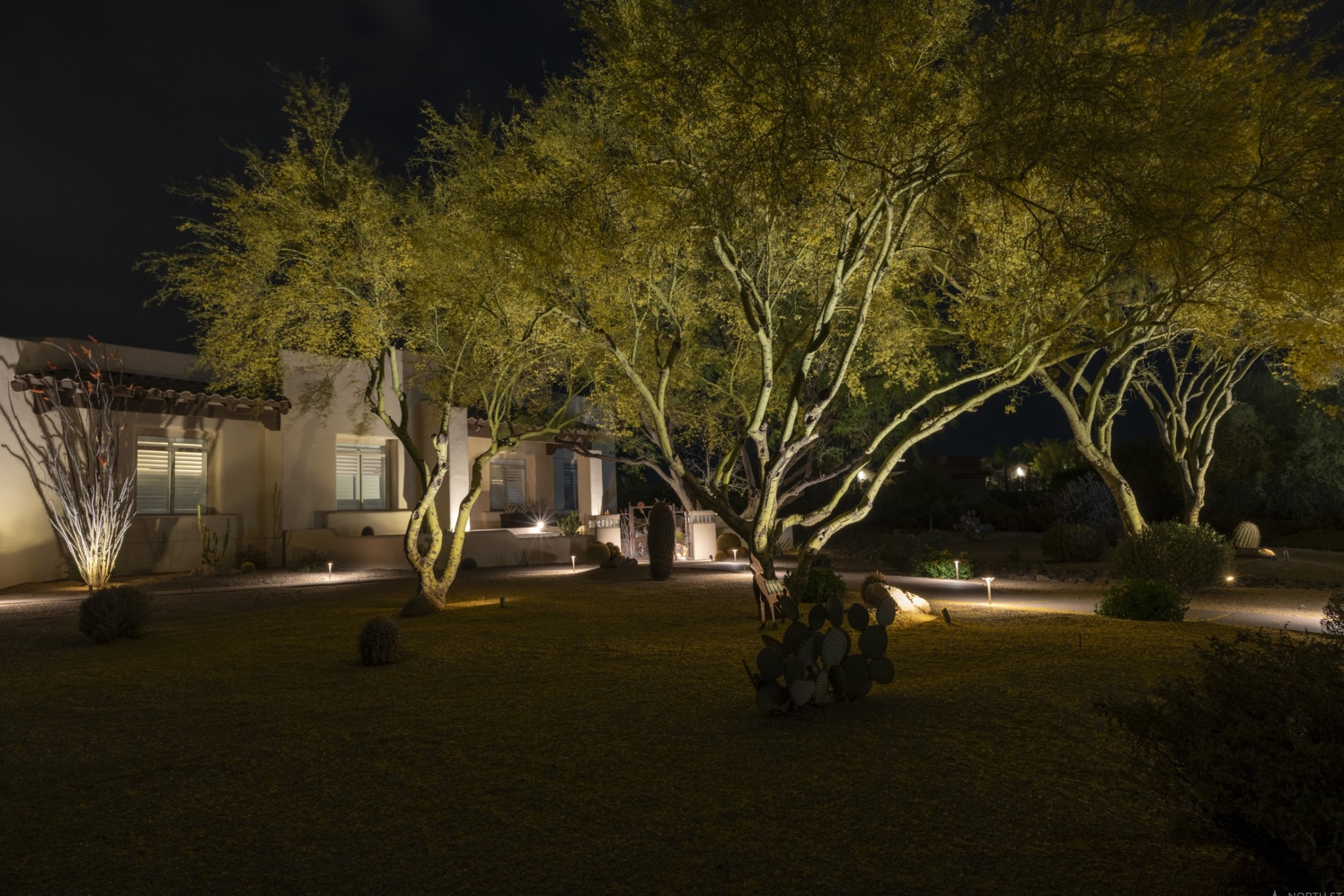
Landscape lights run every night, often for six hours or more, so the wattage of every fixture adds up. Cutting each fixture’s power by 75% to 85% makes a noticeable difference on a system with dozens of lights, and an even bigger one on commercial properties and HOA common areas that light parking, paths, and entries all night.
Lower wattage has a second benefit that’s easy to overlook: it takes load off the transformer. A transformer that was near its limit with halogen bulbs has plenty of headroom after an LED conversion, which leaves room to add fixtures later without upgrading the power supply. See our guide to energy-efficient lighting for HOAs for how this plays out across a community.
Longer Life and Less Maintenance
A halogen landscape bulb typically lasts 2,000 to 4,000 hours. Run nightly, that can mean replacing bulbs every year or two, and on a halogen system, every burned-out bulb raises the voltage to the ones still working, so they fail faster too.
Quality landscape LEDs are rated for 25,000 to 50,000 hours, which works out to many years of nightly use. That means:
- Far fewer bulb replacements and service calls
- No dark spots in the design while you wait for a replacement
- Consistent light output, without the gradual dimming and yellowing of aging halogen bulbs
LED fixtures still benefit from occasional cleaning and re-aiming as plants grow, but the constant cycle of bulb changes goes away. Our landscape lighting troubleshooting guide covers the maintenance that keeps any system running well.
Built for Arizona Heat
Arizona is hard on outdoor lighting. Summer ground temperatures, intense UV, dust, monsoon storms, and hard-water irrigation all take a toll on fixtures, lenses, and connections.
LEDs run much cooler than halogen bulbs, which helps in a few ways. Cooler fixtures don’t bake irrigation water into crusty mineral deposits as quickly, they’re less likely to crack lenses, and they put less heat stress on sockets and seals. Fixture quality still matters: a cheap LED with a poorly designed driver can fail early in the desert heat. That’s why we install professional-grade fixtures, including FX Luminaire, that are built for these conditions. Read more about how Arizona heat and sun affect outdoor lighting fixtures.
Better Control Over Color and Mood
Halogen gives you one look: warm, yellowish white. LED gives you a range of options:
- Color temperature. Warm white, around 2,700K to 3,000K, is the right choice for most homes. It flatters stucco, stone, and desert plants and matches the warm tone people expect from outdoor lighting. Cooler whites can work for modern architecture or specific accent effects.
- Dimming. Many LED systems can be dimmed by zone, so you can turn the patio down for dinner and keep the paths bright.
- Color-changing lighting. RGB and tunable LED fixtures can wash a wall or palm in color for holidays, parties, or game days, then return to warm white the rest of the year.
Warm, low-glare LED lighting is also the dark-sky-friendly choice. If you’re in Scottsdale, see our guide to Scottsdale’s outdoor lighting code and ESL rules.
LED Fixture Options for Outdoor Spaces
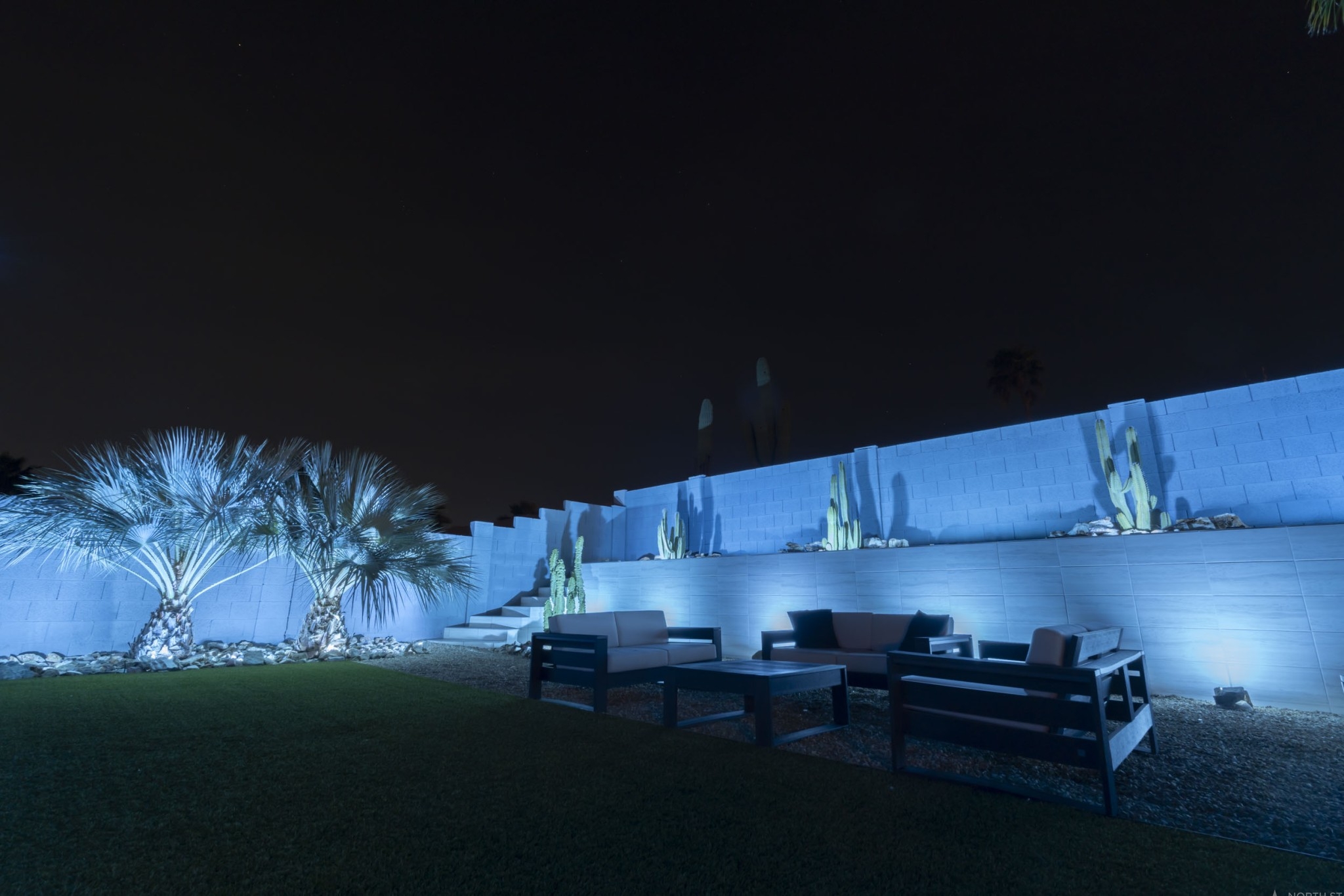
One of the biggest advantages of LED is how many forms it comes in. That flexibility lets a designer light each part of a property with the right fixture:
- Uplighting from the base of trees, palms, cactus, and walls to add height and drama
- Downlighting from trees or eaves to cast soft, natural pools of light, sometimes called moonlighting
- Path lighting to guide guests safely along walkways and driveways
- Step lighting built into stairs and walls for safe footing
- Wall sconces for soft, diffused light at entries and patios
- Underwater lighting for pools, spas, fountains, and water features
- Strip and under-counter lighting for outdoor kitchens, bars, and steps
- Bistro string lights for a warm, festive glow over patios and dining areas
- Tree and vine lighting that wraps trunks and branches for year-round sparkle
- Color-changing fixtures for walls, palms, and pools
Mix light directions for depth
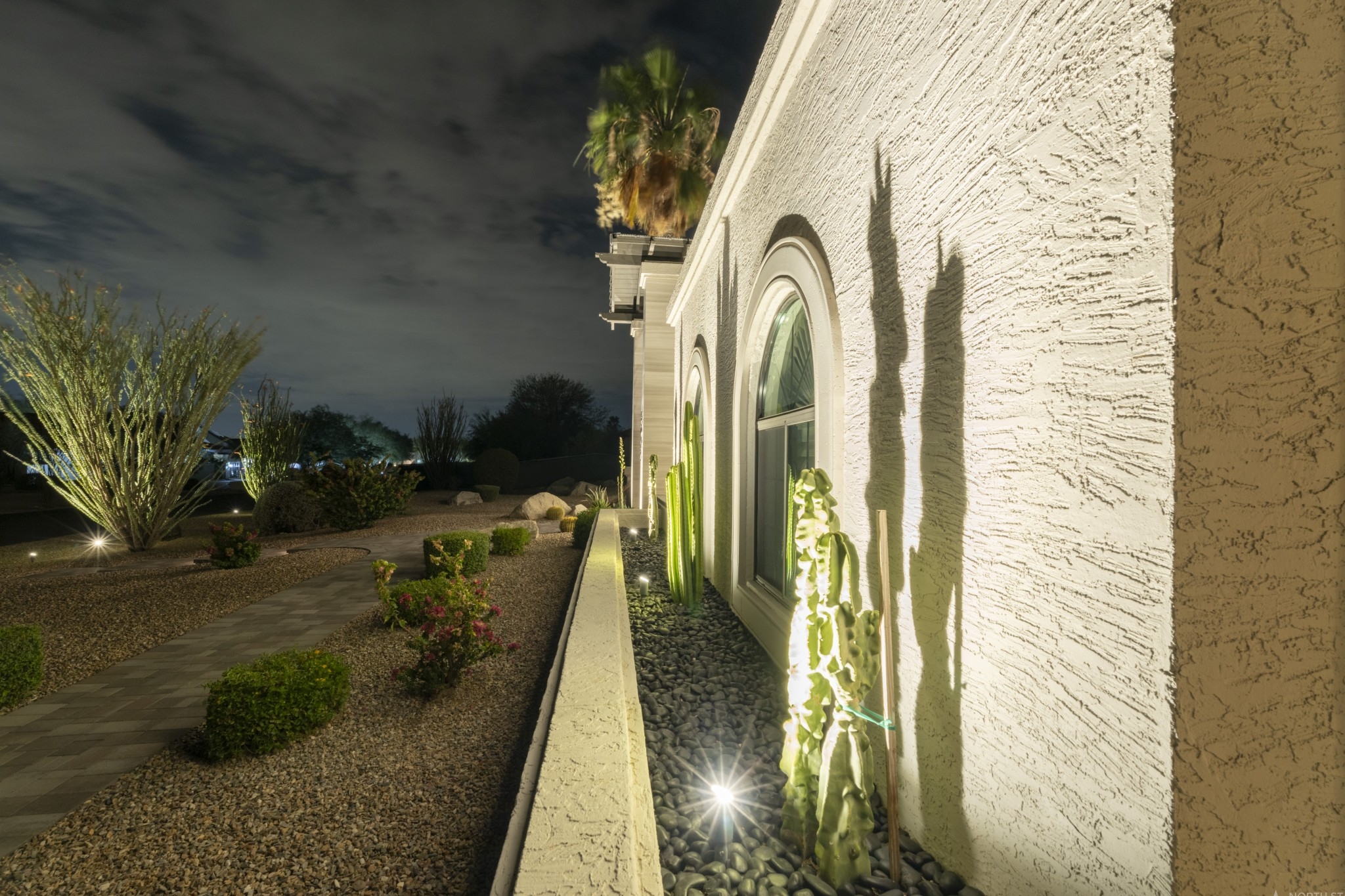
One of the core rules of lighting design is to use light from several directions. A yard lit only by path lights looks flat; one lit only by uplights can feel harsh. Combining uplighting, downlighting, grazing, and path lighting creates depth, texture, and shadow, like the cactus silhouettes above. LED’s range of fixture types and beam spreads makes that layering much easier.
Converting an Existing Halogen System to LED
You don’t always need to tear out a halogen system to go LED. Depending on its condition, a conversion can take a few forms:
- LED replacement bulbs. Many common low-voltage halogen fixtures accept LED replacement bulbs. It’s the least expensive route, though results depend on the condition of the fixtures and wiring.
- New LED fixtures on existing cable. When the cable and layout are sound, new integrated LED fixtures can often be installed in the same locations.
- A full redesign. For older or failing systems, starting fresh gives you modern fixtures, better placement, smart controls, and a design built around how you use the yard today.
A professional conversion also checks the parts that matter for LED: the transformer’s compatibility (some LEDs flicker on older magnetic transformers), the condition of splices and cable, voltage at the fixtures, and timer or control settings. Our LED conversion service handles the whole process, and our guide on when to repair vs. replace your outdoor lighting system can help you decide which route makes sense.
A Cleaner Choice for the Environment
LEDs reduce environmental impact mostly by using less electricity, which means less demand on power plants over the life of the system. Because they last so much longer, they also mean far fewer bulbs manufactured, shipped, and thrown away. And unlike fluorescent and CFL bulbs, LEDs contain no mercury.
Why Homeowners and Businesses Choose North Star
Since 1995, North Star has designed, installed, and maintained outdoor lighting for homes, HOAs, and commercial properties across Scottsdale and the greater Phoenix area. Clients choose us for:
- Custom lighting design tailored to each property
- Professional-grade fixtures, including FX Luminaire, built for the Arizona climate
- Careful installation, aimed and adjusted at night
- 24-hour service and repair, plus monthly maintenance options
We work on residential and commercial properties, and we also light events and special occasions.
Ready to Switch to LED?
Whether you want to convert an existing halogen system or design new LED landscape lighting from scratch, we’ll walk you through the options and show you what LED can do for your property. Call (480) 248-0194 or request a free estimate.
Frequently Asked Questions
Is LED landscape lighting worth the cost?
For most systems, yes. LED fixtures cost more upfront than halogen bulbs, but they use roughly 75% to 85% less electricity and last many times longer, so you save on both power and replacement bulbs. On a system that runs every night, those savings add up over the years, and maintenance drops sharply.
How long do LED landscape lights last?
Quality landscape LEDs are typically rated for 25,000 to 50,000 hours. Run for about six hours a night, that’s well over a decade of use. Actual life depends on fixture quality, heat, and installation.
Can I put LED bulbs in my existing halogen fixtures?
Often, yes. Many low-voltage halogen fixtures accept LED replacement bulbs. Some LED bulbs flicker on older magnetic transformers or with certain timers, so it’s worth having the transformer and wiring checked, especially on older systems.
Do I need a new transformer to switch to LED?
Not always. LEDs draw much less power, so an existing transformer usually has more than enough capacity. Some older magnetic transformers aren’t a good match for certain LED bulbs, though, which can cause flickering. A technician can test the system and tell you whether the transformer can stay.
What color temperature is best for outdoor LED lighting?
Warm white, around 2,700K to 3,000K, works best for most homes. It looks natural on stucco, stone, and desert plants and is the dark-sky-friendly choice. Cooler whites are best saved for specific modern or accent effects.
Are LED lights better for the environment?
Yes. LEDs use far less electricity, last much longer so fewer bulbs end up in landfills, and contain no mercury, unlike fluorescent and CFL bulbs.