

In Arizona, your pool is not just a daytime feature. It is a central part of how you use your backyard, especially once the sun goes down and temperatures finally drop. Without the right outdoor pool lighting, that space becomes limited, unsafe, and underused.
Most homeowners think about pool lighting as a finishing touch. In reality, it is one of the most important elements of your outdoor setup. Poor lighting creates dark spots, glare, and uneven visibility. That leads to safety risks around steps, edges, and wet surfaces. It also takes away from the overall look of your backyard, even if everything else is well-designed.
The right lighting changes how the space functions. It makes your pool usable at night, improves safety for family and guests, and creates a clean, high-end look that ties your entire outdoor area together. When done correctly, it does not feel like added lighting. It feels like the space was designed to be used that way from the start.
Why Outdoor Pool Lighting Matters in Arizona
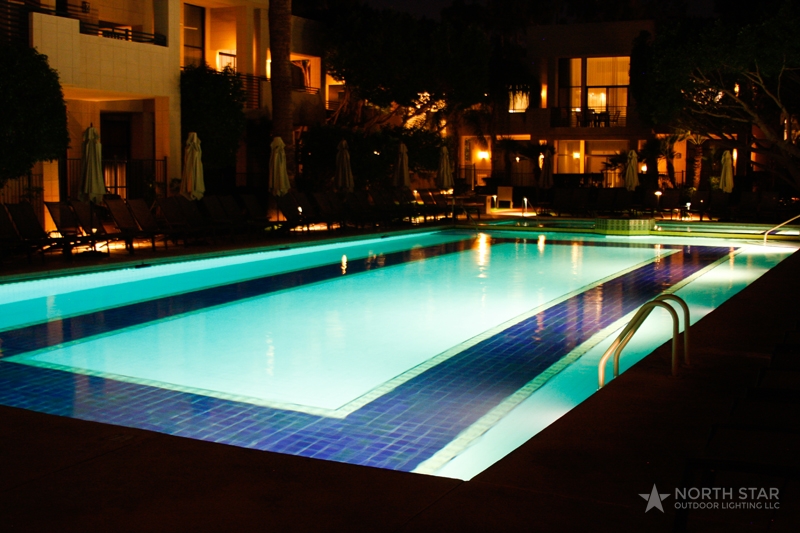
Extending Usability of Your Pool
In Arizona, daytime temperatures often make pool use less comfortable. The real value of a pool shows up in the evening, when the heat drops and the space becomes more enjoyable.
- Arizona heat makes nighttime swimming more comfortable
- Evenings are often the most practical time to use the pool
- Without lighting, that time is limited or unusable
- Lighting allows:
- Evening entertaining
- Host guests comfortably after sunset
- Create a more inviting and functional outdoor space
- Safer late-night use
- Clear visibility reduces risk when entering or exiting the pool
- Allows for extended use without guesswork
- Evening entertaining
- Increase the value of the outdoor living space
- Turns your backyard into a usable nighttime environment
- Maximizes the investment you have already made in your pool
Safety for Family and Guests
Safety is one of the most important reasons to invest in proper pool lighting. Poor visibility increases the chance of accidents, especially around water.
- Prevent slips, falls, and accidents
- Wet surfaces combined with low visibility create risk
- Proper lighting helps people move confidently around the area
- Highlight:
- Pool edges
- Clearly define boundaries to avoid missteps
- Steps and entry points
- Ensure safe entry and exit at all times
- Pool edges
- Reduce liability risks
- Important for homes that host guests frequently
- Proper lighting lowers the chance of preventable incidents
Enhancing Property Value and Curb Appeal
Outdoor lighting is one of the easiest ways to elevate the look and feel of your property, especially around a pool.
- Well-lit pool areas improve perceived home value
- Buyers and guests see a finished, usable outdoor space
- Lighting makes the property feel more complete
- Creates a high-end, resort-style look
- Layered lighting adds depth and dimension
- Transforms a basic pool into a standout feature
- Makes the backyard more attractive for resale
- Strong visual impact during evening showings
- Helps your home stand out in a competitive market
Done right, pool lighting is not just functional. It becomes a defining feature of your entire outdoor space.
Types of Outdoor Pool Lighting to Consider
Underwater Pool Lighting
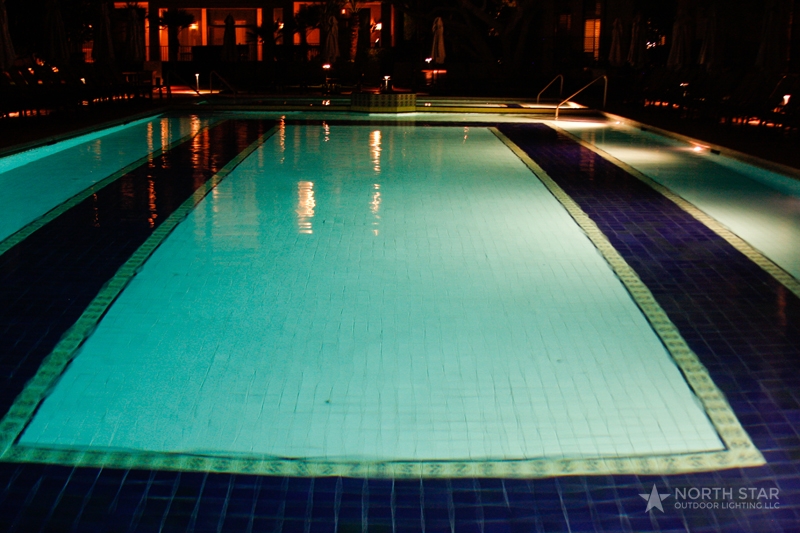
Underwater lighting is the foundation of any well-designed pool setup. It defines how the pool looks and functions at night.
- Built into the pool structure
- Installed during construction or added through retrofit solutions
- Designed to evenly illuminate the water
- Common options:
- LED color-changing lights
- Adjustable colors for different moods or events
- Popular for entertaining and visual impact
- White LED for a clean, modern look
- Consistent, bright illumination
- Ideal for a more refined and minimal design
- LED color-changing lights
- Benefits:
- Illuminates the entire pool basin
- Improves visibility for swimmers
- Makes depth and edges easier to see
- Creates a visual focal point
- The pool becomes the centerpiece of the backyard at night
- Enhances overall ambiance
- Illuminates the entire pool basin
Pathway and Perimeter Lighting
This lighting defines how people move through the space and prevents unsafe areas around the pool.
- Installed along walkways and pool edges
- Guides movement around the pool area
- Reduces dark zones where accidents can happen
- Helps define space and guide movement
- Clearly separates pool, patio, and landscaping areas
- Creates a natural flow through the backyard
- Ideal placements:
- Around decking
- Highlights boundaries and prevents missteps
- Leading to and from the pool
- Ensures safe access from doors, patios, and seating areas
- Around decking
Accent Lighting for Landscaping
Accent lighting adds depth and makes the entire pool environment feel intentional and complete.
- Highlights surrounding features:
- Palm trees
- Desert plants
- Rock features and hardscape elements
- Adds depth and dimension to the space
- Creates contrast between light and shadow
- Prevents the pool area from feeling flat or isolated
- Design impact
- Connects the pool visually to the rest of the yard
- Enhances the overall nighttime aesthetic
Step and Deck Lighting
These are critical for safety and should never be overlooked in a pool lighting plan.
- Installed in:
- Pool steps
- Deck transitions and elevation changes
- Prevents missteps and improves visibility
- Clearly defines changes in height
- Reduces risk in high-traffic areas
- Best use cases
- Entry points into the pool
- Areas where decking meets landscaping or stairs
Overhead and Ambient Lighting
Ambient lighting provides overall visibility without overpowering the space.
- Mounted on structures like:
- Pergolas
- Patio covers
- Outdoor living structures
- Provides general illumination without harsh brightness
- Fills in darker areas without creating glare
- Supports layered lighting design
- Design considerations
- Keep brightness balanced to maintain ambiance
- Avoid direct light shining into seating or pool areas
A well-designed pool lighting system combines these elements to create a space that is functional, safe, and visually cohesive.
Where to Place Pool Lighting for Maximum Impact
Highlight Key Functional Areas
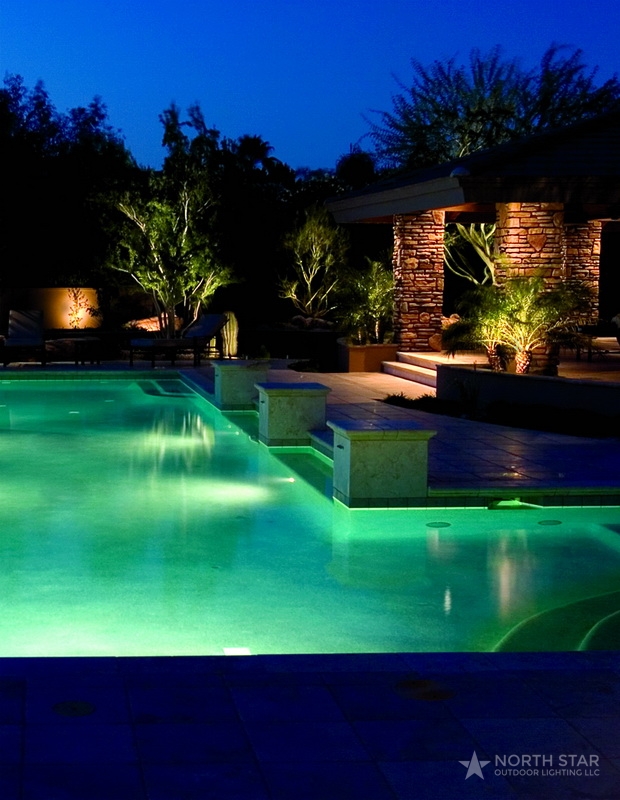
Lighting should first solve for visibility and usability before anything else. Focus on the areas where people interact with the space.
- Pool entry points
- Clearly illuminate where people enter and exit the water
- Reduce hesitation or missteps, especially at night
- Steps and ladders
- Ensure each step is visible from multiple angles
- Prevent depth misjudgment in and around the pool
- Seating areas
- Light up lounge chairs, outdoor furniture, and gathering spaces
- Make the area usable for conversation and relaxation after dark
If these areas are not properly lit, the space becomes difficult and unsafe to use, no matter how good it looks.
Create Layers of Light
The best pool lighting designs do not rely on a single light source. They use multiple layers to create balance and depth.
- Combine:
- Ambient lighting
- General illumination for the entire space
- Task lighting
- Focused light for functional areas like steps and walkways
- Accent lighting
- Highlights landscaping and architectural features
- Ambient lighting
- Why layering matters
- Prevents harsh lighting and glare
- Creates a more natural, visually appealing environment
- Allows different areas to stand out without overwhelming the space
- Goal
- A balanced look where no single light dominates
- Smooth transitions between light and shadow
Avoid Common Placement Mistakes
Poor placement can ruin even the best lighting fixtures. These are the issues that show up most often in DIY or poorly designed setups.
- Lights shining directly into the eyes
- Causes glare and discomfort
- Makes the space less usable, not more
- Uneven spacing creates dark spots
- Leaves certain areas underlit and unsafe
- Breaks visual consistency across the space
- Overlighting that washes out the space
- Too much brightness removes depth and ambiance
- Creates a flat, overly harsh environment
Placement is what determines whether your lighting feels intentional or random. Done right, it improves both safety and overall design without drawing attention to the fixtures themselves.
Safety Considerations for Pool Lighting
Proper Illumination Levels
Lighting should make the space clearly visible without creating glare or harsh contrast. The goal is balanced visibility, not maximum brightness.
- Enough light to clearly see:
- Edges of the pool
- Prevent accidental missteps near water
- Depth changes
- Help swimmers and guests understand where shallow and deep areas begin
- Edges of the pool
- Avoid overly dim setups
- Low light creates blind spots and increases risk
- Makes navigation around the pool difficult
- Avoid overly bright setups
- Excess brightness creates glare and eye strain
- Can distort visibility rather than improve it
The right level of lighting makes movement around the pool feel natural and safe.
Electrical Safety and Compliance
Pool lighting involves water and electricity, which makes proper installation non-negotiable.
- Use licensed professionals for installation
- Ensures all components are installed correctly
- Reduces risk of electrical hazards
- Ensure:
- Proper wiring
- Secure, protected connections designed for outdoor use
- Weatherproof fixtures
- Built to handle heat, moisture, and environmental exposure
- Code compliance
- Meets local safety regulations and standards
- Proper wiring
Cutting corners here creates serious safety risks and potential liability.
Slip and Trip Hazard Prevention
Lighting should guide movement and eliminate areas where accidents are likely to happen.
- Illuminate:
- Wet surfaces
- Pool decks, steps, and transition areas
- Walkways
- Paths leading to and from the pool
- Wet surfaces
- Reduce shadowed areas
- Shadows can hide elevation changes or obstacles
- Even lighting distribution improves visibility across the entire space
A well-lit pool area is not just easier to use. It significantly reduces the risk of accidents for everyone on the property.
Design Ideas for a High-End Pool Lighting Setup
Resort-Style Lighting Concept
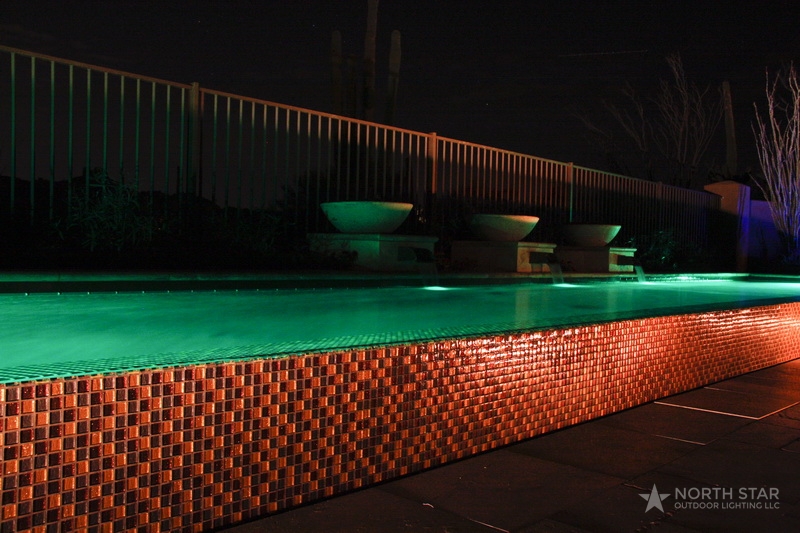
This approach focuses on creating a relaxed, upscale environment that feels like a high-end hotel or resort.
- Soft, layered lighting
- Multiple light sources working together instead of one dominant fixture
- Balanced brightness that avoids harsh contrasts
- A combination of underwater and landscape lighting
- The pool glows from within while the surrounding elements are highlighted
- Creates depth across the entire backyard
- Warm tones for a relaxed atmosphere
- Softer color temperatures make the space feel more inviting
- Ideal for evening use and entertaining
- Overall effect
- Calm, comfortable, and visually cohesive
- Designed for extended use without feeling overly bright
Modern Minimalist Approach
This style focuses on clean lines, simplicity, and controlled placement of lighting.
- Clean white lighting
- Consistent color temperature throughout the space
- Emphasizes a modern, polished look
- Subtle fixtures with hidden placement
- Lighting sources are not the focal point
- Fixtures are integrated into the design rather than standing out
- Focus on symmetry and simplicity
- Even spacing and balanced layouts
- Minimal clutter in both design and lighting
- Best suited for
- Contemporary homes
- Homeowners looking for a sleek, understated finish
Desert Landscape Integration
In Arizona, the surrounding environment plays a major role in how the pool area feels at night.
- Highlight native plants and textures
- Use lighting to bring out the structure of desert plants
- Emphasize natural materials like stone and gravel
- Use lighting to blend the pool with the surrounding environment
- Avoid isolating the pool as a separate feature
- Create a seamless transition between water, landscape, and architecture
- Design goal
- Make the entire backyard feel connected
- Enhance the natural look instead of overpowering it
Entertaining-Focused Setup
This design is built around how the space is used when hosting guests.
- Brighter zones near seating and dining
- Ensure visibility for conversation, food, and movement
- Keep these areas functional without being overly harsh
- Adjustable lighting for different occasions
- Dimmer controls or color adjustments for flexibility
- Shift between relaxed evenings and more active gatherings
- Strategic contrast
- Brighter functional zones paired with softer ambient lighting around the pool
- Keeps the space dynamic and comfortable
- Ideal for
- Homeowners who regularly host gatherings
- Backyards designed as social spaces
Each of these approaches can be customized or combined. The best results come from designing the lighting around how you actually use your pool and outdoor space.
LED vs Traditional Lighting: What Works Best
Benefits of LED Lighting
LED lighting has become the standard for outdoor and pool lighting for a reason. It delivers better performance with lower long-term cost.
- Energy efficiency
- Uses significantly less power than traditional bulbs
- Reduces ongoing energy costs, especially with nightly use
- Longer lifespan
- LEDs last far longer than halogen or incandescent options
- Fewer replacements and less maintenance over time
- Low maintenance
- Durable and designed for outdoor conditions
- Less frequent service compared to traditional lighting systems
For most homeowners, LED is not just an upgrade. It is the baseline for a modern system.
Color Options and Control
One of the biggest advantages of LED lighting is flexibility. It allows you to adjust the look and feel of your pool area based on how you are using it.
- Ability to change colors for mood or events
- Set a clean, white look for everyday use
- Switch to color modes for entertaining or special occasions
- Smart control systems for automation
- Adjust brightness and color from your phone
- Create presets for different times of day or activities
- Schedule lighting to turn on and off automatically
This level of control adds both convenience and versatility to your outdoor space.
Cost Considerations
While LED systems require a higher upfront investment, they typically deliver better value over time.
- Higher upfront cost
- Initial installation and fixtures cost more than traditional options
- Especially true for advanced or smart systems
- Lower long-term operating cost
- Reduced energy consumption lowers utility bills
- Longer lifespan reduces replacement and maintenance expenses
- Overall value
- Better performance, lower maintenance, and greater flexibility
- Strong return on investment over the life of the system
For pool lighting, LED is the clear choice when balancing performance, cost, and long-term reliability.
Common Mistakes to Avoid
Overlighting the Area
More light does not mean better results. One of the most common mistakes is adding too many fixtures or using too-bright lights.
- Too much light creates glare and discomfort
- Harsh lighting makes it difficult to relax or enjoy the space
- Can reflect off water and create visual strain
- Reduces visual appeal
- Eliminates contrast and depth
- Makes the space feel flat instead of layered and intentional
- What to aim for
- Balanced lighting with soft transitions
- Enough visibility without overpowering the space
Ignoring Landscape Lighting
Focusing only on the pool leaves the rest of the yard in darkness, which creates an incomplete and disconnected look.
- Pool lighting alone creates an incomplete look
- The pool stands out, but everything around it disappears
- The space feels unfinished at night
- Surrounding areas need illumination
- Landscaping, pathways, and structures should be part of the design
- Lighting should connect the pool to the rest of the backyard
- Result of proper integration
- A cohesive, well-designed outdoor environment
- Improved depth and visual balance
DIY Installation Risks
Outdoor lighting, especially around a pool, requires more than basic installation knowledge.
- Improper wiring
- Incorrect connections can lead to system failure or damage
- Increased risk when dealing with water and electricity
- Safety hazards
- Poor installation can create serious electrical risks
- Non-compliant setups may not meet local safety codes
- Poor design execution
- Incorrect placement leads to glare, shadows, and uneven coverage
- Wasted investment due to ineffective layout
- What this leads to
- Higher long-term costs from repairs or rework
- A system that does not perform or look the way it should
The Right Pool Lighting Changes Everything
Pool lighting is not just a finishing detail. It directly affects how your space looks, how it functions, and how safe it is to use. When it is done right, your pool becomes a usable, inviting part of your home every night. When it is done wrong, it limits how often you use the space and increases risk.
If your pool area is not in use at night or feels incomplete, now is the time to fix it.
North Star Outdoor Lighting specializes in custom-designed lighting systems that improve safety, enhance appearance, and make your outdoor space fully usable after dark.
FAQs
What is the best type of lighting for a pool area?
- A combination of underwater, pathway, and accent lighting
How much lighting do I need around my pool?
- Enough to eliminate dark spots while maintaining ambiance
Are LED lights better for outdoor pool lighting?
- Yes, due to efficiency, longevity, and flexibility
Can I control pool lighting with my phone?
- Yes, with smart lighting systems
Is professional installation necessary?
- Strongly recommended for safety and proper design
How long does installation take?
- Typically a few days depending on project size