
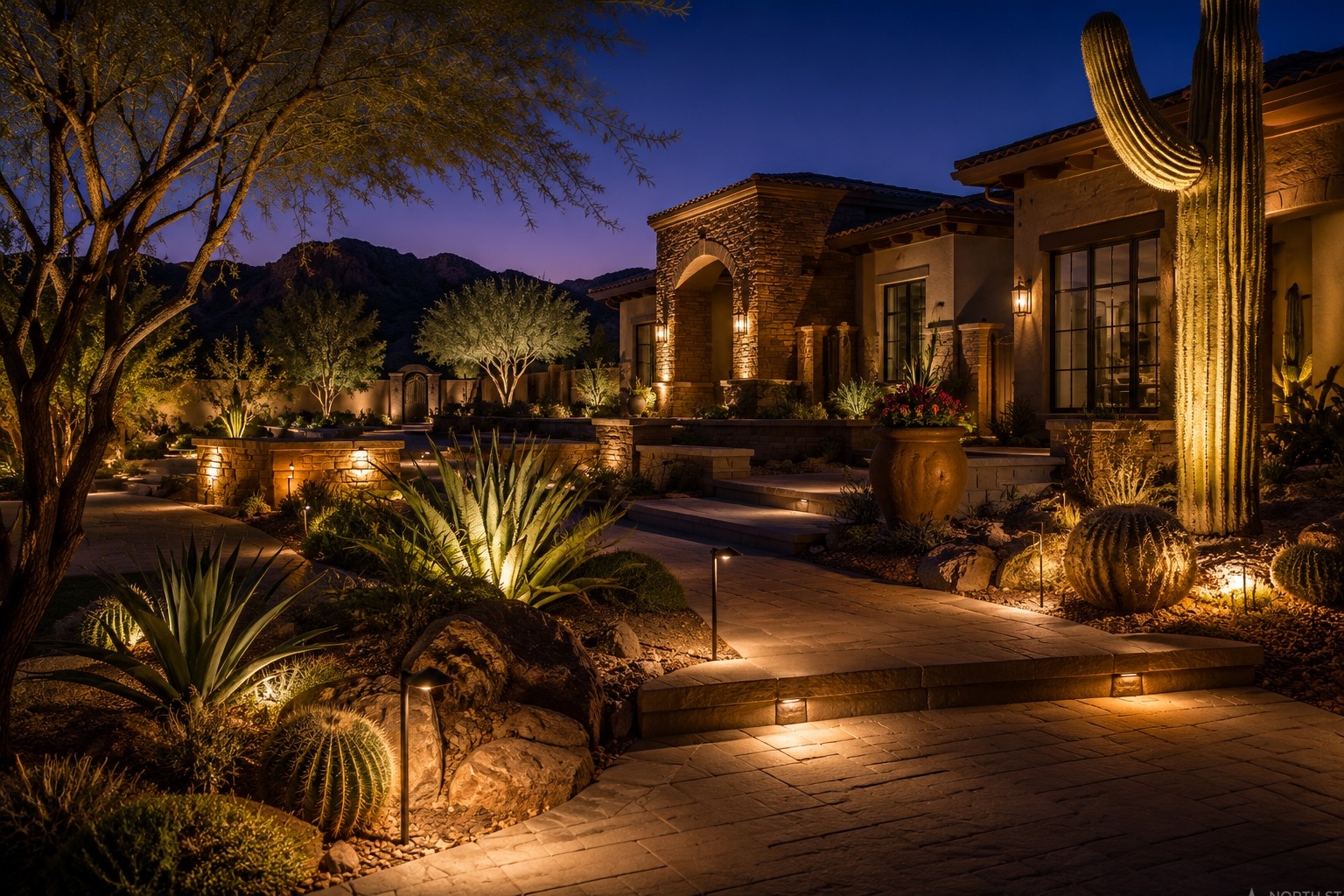
Most outdoor lighting setups do just enough to make a property visible at night. Luxury landscape lighting does something completely different. It changes how the property looks, feels, and is used after the sun goes down.
High-end homes are no longer treating outdoor space as an afterthought. Backyards, entryways, and architectural features are designed to be seen and experienced at night just as much as during the day. That shift is what’s driving demand for intentional, layered lighting systems built around the property, not just added to it.
Luxury lighting landscapes are not about adding more fixtures. They’re about placing the right light in the right places to create depth, contrast, and focus. When done correctly, the lighting feels subtle but makes a strong impact. It highlights architecture, brings landscaping to life, and creates a controlled, cohesive look across the entire property.
For homeowners in Arizona, execution matters even more. Open layouts, desert landscaping, and harsh daytime conditions require a lighting approach that balances durability with design. That’s where a custom plan makes the difference.
What Defines a Luxury Landscape Lighting System
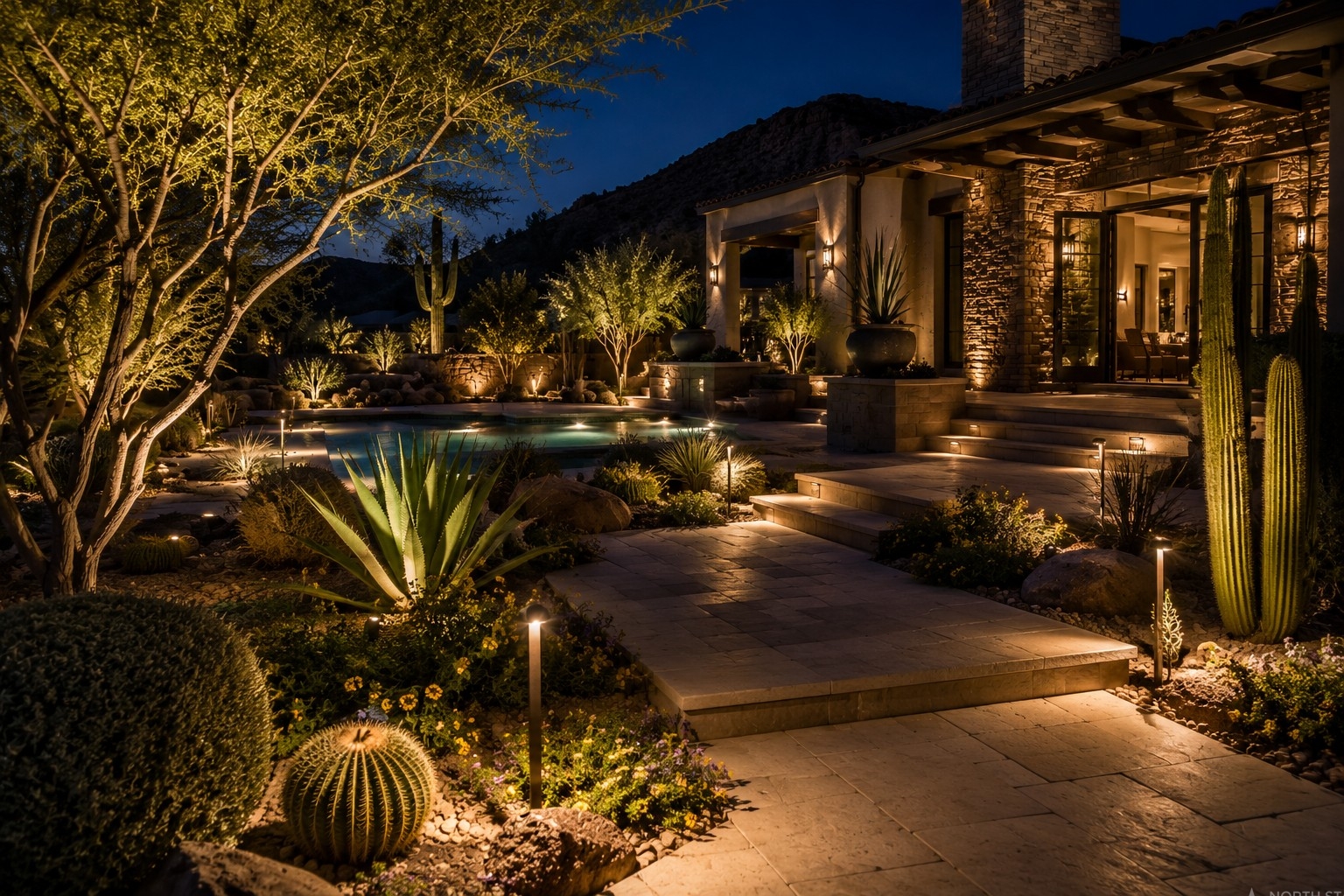
Beyond Basic Path Lights
Most standard lighting setups are built for function. They light walkways, improve visibility, and meet basic safety needs. Luxury systems take a completely different approach.
- Difference between standard and luxury systems:
- Basic: function only
- Even spacing, minimal planning, limited visual impact
- Luxury: design, depth, and atmosphere
- Intentional placement to shape how the property looks at night
- Basic: function only
- Focus on:
- Visual impact
- Creating focal points instead of evenly lighting everything
- Balance of light and shadow
- Using contrast to add depth and dimension
- Visual impact
Layered Lighting Approach
Luxury landscape lighting is built in layers, not installed as a single solution. Each layer serves a purpose and works together to create a complete look.
- Ambient lighting:
- Overall glow across the property
- Sets the baseline visibility without overpowering the space
- Accent lighting:
- Highlighting focal points like trees, architectural features, and key design elements
- Draws attention to what matters most
- Task lighting:
- Functional areas like walkways, patios, and outdoor kitchens
- Provides usability without disrupting the overall design
Integration with Property Design
Lighting should feel like part of the property, not something added after the fact.
- Lighting should complement:
- Architecture
- Enhances the structure, lines, and materials of the home
- Landscaping
- Brings out texture, height, and depth in plants and trees
- Outdoor features like pools and patios
- Supports how the space is used at night
- Architecture
A well-designed system works with the existing layout to create a cohesive, high-end result rather than competing with it.
Core Elements of Luxury Landscape Lighting Design
Architectural Lighting
The home itself should be one of the main focal points at night. Lighting needs to enhance structure, not overpower it.
- Highlight key features of the home:
- Columns
- Stonework
- Entryways
- Unique architectural lines or materials
- Techniques:
- Uplighting
- Placed at the base to draw the eye upward
- Adds scale and presence to the home
- Grazing walls for texture
- Light positioned close to the surface
- Emphasizes stone, brick, or textured finishes
- Uplighting
Landscape Feature Lighting
Landscaping plays a major role in creating depth and dimension across the property.
- Trees:
- Uplighting for height and structure
- Highlights trunk and canopy
- Creates vertical interest
- Moonlighting from above for a natural effect
- Fixtures placed in trees to cast soft, downward light
- Mimics natural moonlight
- Uplighting for height and structure
- Gardens and plant beds:
- Soft accent lighting to create depth
- Subtle illumination that separates layers of landscaping
- Avoids over-lighting while still adding visibility
- Soft accent lighting to create depth
Hardscape and Outdoor Living Areas
These areas need to be both functional and visually consistent with the overall design.
- Patios and seating areas:
- Subtle lighting integrated into structures
- Under-cap lighting, step lighting, or recessed fixtures
- Keeps the space usable without harsh glare
- Subtle lighting integrated into structures
- Outdoor kitchens:
- Functional task lighting with clean design
- Focused light for cooking and prep areas
- Blends into the design without standing out
- Functional task lighting with clean design
- Pools and water features:
- Reflection and movement enhancement
- Lighting designed to interact with water
- Adds motion and visual interest at night
- Reflection and movement enhancement
Each of these elements works together to create a cohesive system where every part of the property contributes to the overall look.
Lighting Techniques That Create a Luxury Look
Uplighting vs Downlighting
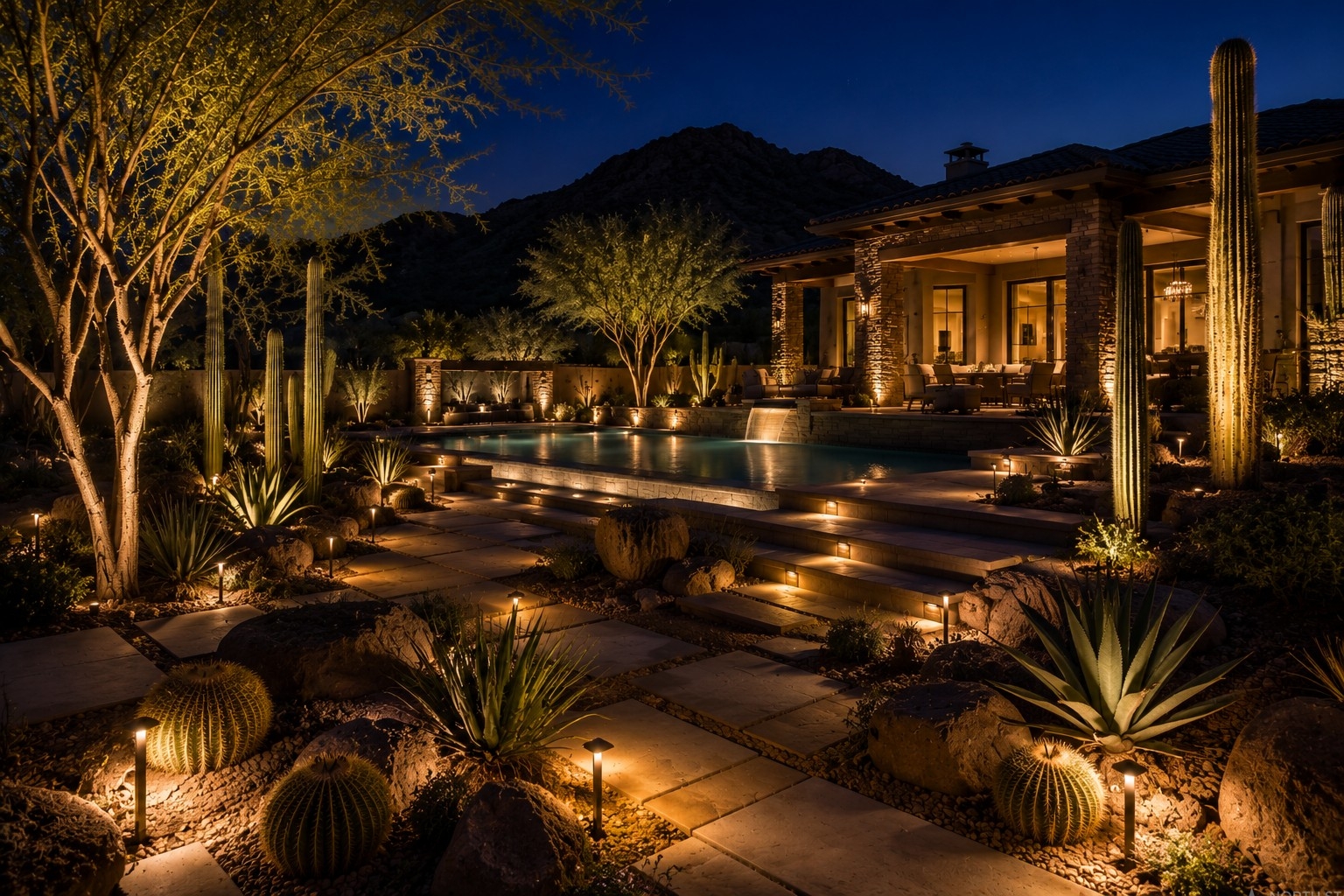
The direction of light is one of the biggest factors in how a property looks at night. High-end systems use both strategically instead of relying on just one.
- Uplighting:
- Dramatic, bold visual impact
- Draws attention to vertical elements like walls, columns, and trees
- Creates strong focal points and adds scale
- Downlighting:
- Softer, more natural feel
- Light is cast downward from above, often from trees or structures
- Mimics natural light and reduces harsh shadows
Using both techniques together creates contrast and balance across the property.
Shadowing and Silhouetting
Luxury lighting is not just about illumination. It’s about controlling what is seen and what is not.
- Using light placement to create contrast
- Strategic positioning allows certain areas to stand out while others fade into the background
- Prevents the space from feeling flat or over-lit
- Enhancing textures and shapes
- Trees, plants, and architectural elements gain dimension through shadow
- Silhouetting highlights outlines against a lit background for added visual interest
These techniques create depth and make the lighting feel intentional rather than uniform.
Grazing and Washing
These are two distinct approaches to lighting surfaces, and each serves a different purpose.
- Grazing:
- Emphasizes surface texture such as stone, brick, or wood
- Light is placed close to the surface to create shadows that highlight detail
- Washing:
- Even light spread across walls or hedges
- Provides a clean, consistent look without strong contrast
Combining grazing and washing allows you to highlight key textures while keeping other areas smooth and balanced.
Fixture Selection for High-End Results
Material Quality
The quality of the fixtures directly impacts both the look and the longevity of the system. This is where many standard installations fall short.
- Brass and copper fixtures:
- Built to handle extreme outdoor conditions, especially in Arizona’s heat
- Resist corrosion and wear over time
- Maintain appearance and performance for years
- Avoiding low-grade materials that degrade quickly
- Aluminum or plastic fixtures often fade, crack, or corrode
- Shorter lifespan leads to inconsistent lighting and higher replacement costs
High-end lighting starts with materials that hold up over time, not just look good initially.
Beam Spread and Light Control
Precision is what separates a basic lighting setup from a luxury design. The ability to control where light goes is critical.
- Narrow vs wide beam angles:
- Narrow beams
- Used to highlight specific features like columns, trees, or architectural details
- Wide beams
- Used for broader coverage, like walls or large landscape areas
- Narrow beams
- Adjustable fixtures for fine-tuning
- Allows for on-site adjustments after installation
- Ensures the light hits exactly where it’s intended
This level of control prevents over-lighting and keeps the design clean and intentional.
Color Temperature
Color consistency plays a major role in creating a cohesive, high-end look.
- Warm white vs cool white:
- Warm tones preferred for luxury residential settings
- Creates a more inviting, natural feel
- Cool tones can feel harsh and out of place in residential environments
- Warm tones preferred for luxury residential settings
- Consistency across the property
- Mixing color temperatures creates a disjointed look
- A uniform tone keeps the entire system visually aligned
Choosing the right color temperature and maintaining it across all fixtures is key to achieving a polished result.
Smart Lighting and Control Systems
Automation and Scheduling
Luxury lighting systems are designed to operate without constant manual control. Automation ensures consistency and convenience.
- Set lighting based on:
- Time of day
- Lights turn on and off automatically at set times
- Sunset and sunrise cycles
- Adjusts throughout the year without manual updates
- Keeps the system aligned with natural light conditions
- Time of day
This creates a predictable, polished look every night without requiring input.
App-Based Control
Modern systems give homeowners full control from anywhere, adding flexibility without complicating setup.
- Adjust zones remotely
- Control specific areas like the front yard, backyard, or pool independently
- Turn sections on or off as needed
- Control brightness and scenes
- Dim lighting for different moods or occasions
- Create presets for entertaining, everyday use, or security
This level of control allows the lighting to adapt to how the space is being used.
Integration with Home Systems
High-end lighting systems don’t operate in isolation. They integrate with the rest of the home’s technology.
- Sync with:
- Security systems
- Coordinate lighting with motion detection or alerts
- Smart home platforms
- Centralized control alongside other home features
- Security systems
Integration creates a more seamless experience, where lighting becomes part of a larger, connected system rather than a standalone feature.
Designing for Arizona Properties
Climate Considerations
Arizona conditions require materials and installation methods that can handle long-term exposure.
- Heat-resistant materials
- Fixtures must withstand extreme summer temperatures without warping or failing
- Wiring and connections need to be rated for outdoor heat conditions
- UV exposure and durability
- Constant sun exposure can degrade low-quality finishes
- High-end materials like brass and copper maintain performance and appearance over time
This is where material selection directly impacts how long the system holds up.
Desert Landscaping Integration
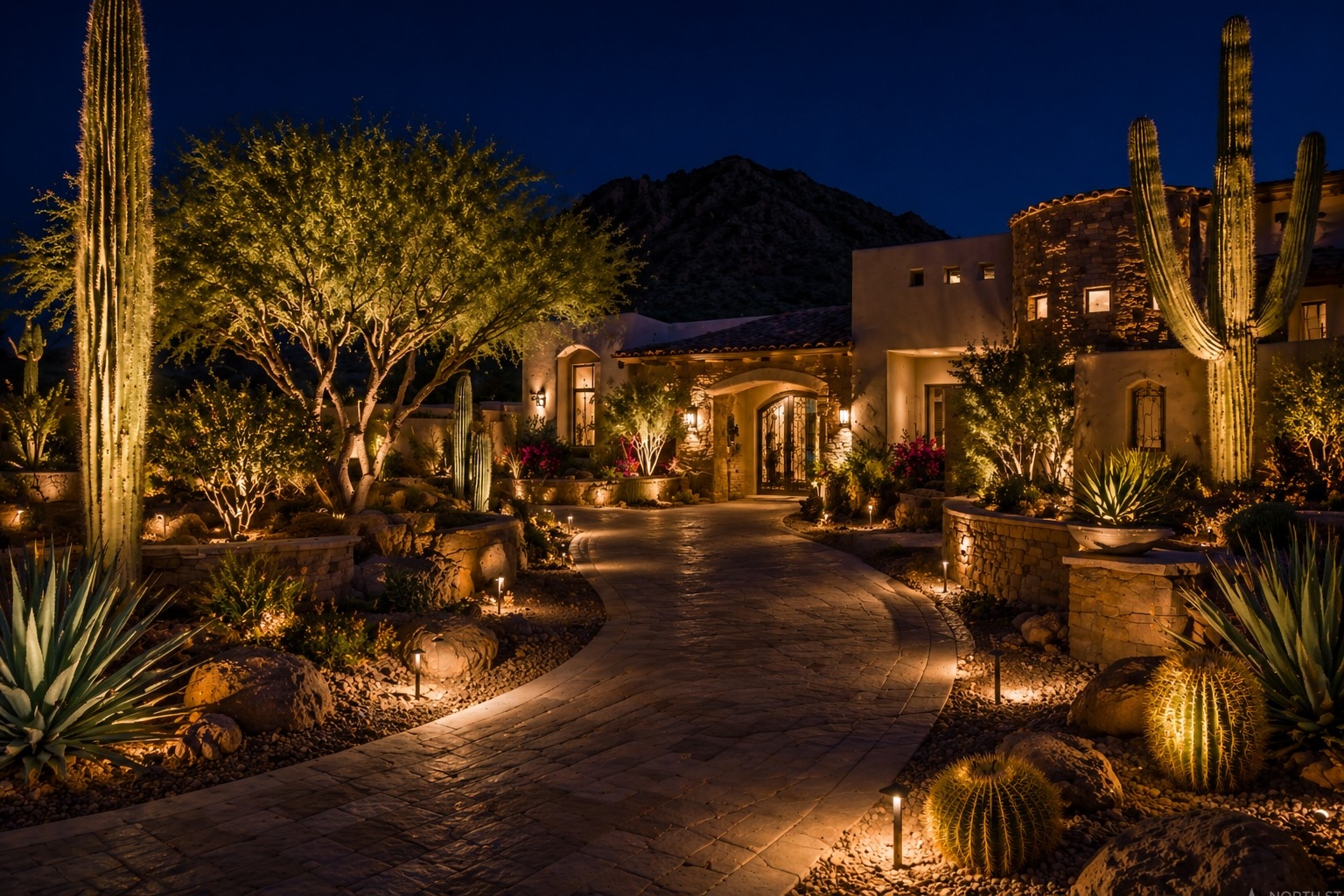
Luxury lighting in Arizona needs to work with desert design, not against it.
- Lighting for:
- Succulents
- Subtle accent lighting to highlight shape without overpowering smaller plants
- Cactus features
- Uplighting to emphasize height and structure
- Rock and stone designs
- Grazing techniques to bring out texture and depth
- Succulents
The goal is to enhance natural elements while keeping the look clean and controlled.
Balancing Light in Open Spaces
Arizona properties often have larger, more open layouts, which require a different approach than dense landscaping.
- Avoid over-lighting large yards
- Too much light flattens the space and removes contrast
- Creates unnecessary glare and reduces visual impact
- Focus on focal points and pathways
- Highlight key architectural and landscape features
- Use lighting to guide movement rather than fill every area
A balanced approach keeps the space visually interesting without making it feel overdone.
How to Plan a Luxury Lighting Project
Start with a Lighting Plan
A high-end result starts with a clear plan, not fixture placement after the fact.
- Walk the property at night
- Identify where natural darkness exists
- See how shadows and existing light affect visibility
- Identify focal points and pathways
- Architectural features that should stand out
- Trees, landscaping, and design elements worth highlighting
- Walkways and transitions that need functional lighting
This step defines where lighting should go and where it should not.
Prioritize Key Areas
Not every part of the property needs the same level of attention. Focus on the areas that drive the most impact.
- Entryways
- First impression from the street
- Emphasize structure and visibility
- Outdoor living spaces
- Patios, seating areas, and entertainment zones
- Balance between ambiance and functionality
- Signature landscape features
- Large trees, custom landscaping, or water features
- Use lighting to create visual anchors across the property
Prioritization keeps the design focused and prevents over-lighting.
Work with a Professional
Luxury lighting requires precision in design, placement, and execution.
- Custom design vs DIY approach
- DIY systems often lack layering and proper light control
- Professional design ensures consistency and balance
- Long-term performance and aesthetics
- Proper installation prevents issues with wiring, placement, and durability
- Adjustments and fine-tuning ensure the system performs as intended over time
A professional approach turns lighting from a basic upgrade into a long-term design feature.
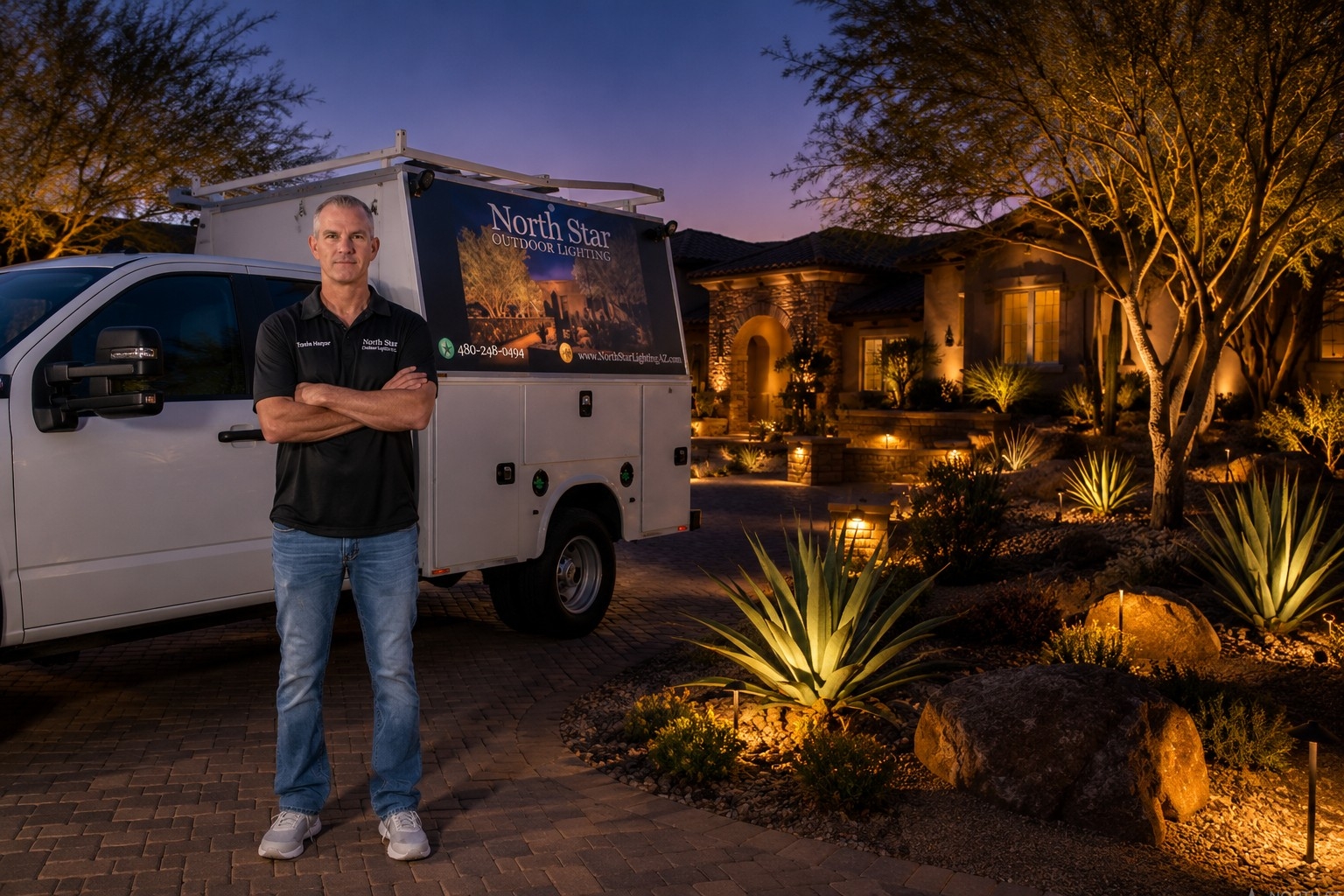
Why Homeowners Choose North Star Outdoor Lighting
Custom Design Approach
Luxury lighting starts with a design that fits the property, not a template.
- Tailored lighting plans for each property
- Layout based on architecture, landscaping, and how the space is used
- Focus on creating a cohesive look across the entire property
- Focus on both function and aesthetics
- Ensuring visibility where needed
- Designing lighting that enhances the overall appearance at night
High-Quality Materials and Installation
The quality of materials and installation directly impacts how the system performs over time.
- Long-lasting fixtures
- Built to handle Arizona heat and environmental conditions
- Maintain performance and appearance without frequent replacement
- Professional-grade installation
- Proper wiring, placement, and alignment
- Avoids common issues like glare, uneven lighting, or premature failure
Focus on Long-Term Results
Luxury lighting is not a one-time upgrade. It’s a system that should perform consistently over time.
- Systems designed for durability and performance
- Built to maintain output and reliability across seasons
- Designed with long-term use in mind
- Ongoing support and adjustments
- Fine-tuning after installation to perfect the look
- Ability to adapt as landscaping or property features change
This approach ensures the lighting continues to deliver both visual impact and performance well beyond the initial install.
Designing a Luxury Outdoor Lighting Experience
Luxury landscape lighting comes down to a few core principles executed correctly.
- Design
- A clear plan that aligns lighting with the property’s architecture and layout
- Precision
- Exact placement, beam control, and balance between light and shadow
- Long-term performance
- Materials and installation are built to hold up over time, especially in Arizona conditions
When done right, the impact goes beyond appearance.
- The right system enhances:
- Property value
- Creates a stronger first impression and elevates the overall look
- Usability of outdoor spaces
- Extends how and when the space can be used
- Overall experience
- Makes the property feel complete and intentional at night
- Property value
A well-designed lighting plan changes how a property is experienced after dark. It turns outdoor space into something that feels just as functional and refined as the interior.
Contact North Star Outdoor Lighting for a consultation and a custom lighting design built around your property. Get a clear vision of how your space can look and function with a system designed for long-term performance and visual impact.
FAQs
What makes landscape lighting “luxury”?
Design, material quality, and layered lighting techniques that create a high-end, cohesive look across the entire property.
How much does luxury landscape lighting cost?
It varies based on property size and design complexity. Higher-end systems are designed for long-term value rather than the lowest upfront cost.
Can existing lighting systems be upgraded?
Yes. Many systems can be redesigned or improved with better fixture placement, upgraded materials, and a more intentional layout.
What color temperature is best for outdoor lighting?
Warm white tones are typically preferred for residential properties. They create a more natural, inviting look.
How long do professional lighting systems last?
High-quality systems can last many years when installed correctly and maintained over time.