
Arizona is one of the toughest environments in the country for outdoor lighting. Extreme heat, constant sun exposure, and high UV levels put far more stress on fixtures than most homeowners realize. In many cases, lighting systems that perform well in other states fail early here, not because of poor installation, but because they were never designed for desert conditions.
Heat and sun impact every part of an outdoor lighting system. Fixture housings warp, finishes fade, lenses cloud, seals break down, and LED components lose efficiency. Wiring insulation becomes brittle, connections loosen, and transformers work harder than intended. These issues often show up gradually as flickering lights, dim output, or discoloration, then turn into full system failures during peak summer months.
Why Arizona’s Climate Is Uniquely Tough on Outdoor Lighting
Outdoor lighting takes a beating anywhere, but Arizona adds a level of stress that many fixtures were never designed to handle. The combination of extreme heat, constant UV exposure, and daily temperature swings causes fixtures to wear out faster, fade sooner, and fail more often.
Extreme Ambient and Surface Temperatures
The air temperature is only part of the story. In Arizona, fixtures are often mounted near surfaces that get far hotter than the outside air, including stucco walls, stone columns, block fences, pavers, and concrete. These materials absorb heat all day, then radiate it back into the fixture, keeping it hot well into the night.
Fixtures mounted directly to masonry and stucco are especially vulnerable because those surfaces hold heat for hours. Enclosed fixtures tend to fail faster because they trap heat, pushing internal temperatures high enough to shorten the life of LED components, wiring, and internal drivers.
Constant UV Exposure
Arizona also experiences intense UV exposure year-round, which quickly breaks down outdoor materials. Direct sun causes the most obvious damage, but reflected UV from concrete, pool decks, and stone hardscape can be just as destructive.
South- and west-facing fixtures take the most punishment because they receive the strongest afternoon sun, which accelerates fading, lens clouding, and seal breakdown.
Daily Thermal Expansion and Contraction
Arizona’s temperature swings cause fixtures to expand during the day and contract at night. Over time, this stresses housings, lenses, and seals, leading to micro-cracking and early failure. This constant movement can also loosen mounting hardware and internal connections, which is why flickering lights and intermittent failures are common in desert installations.
How Heat Impacts Outdoor Lighting Fixtures
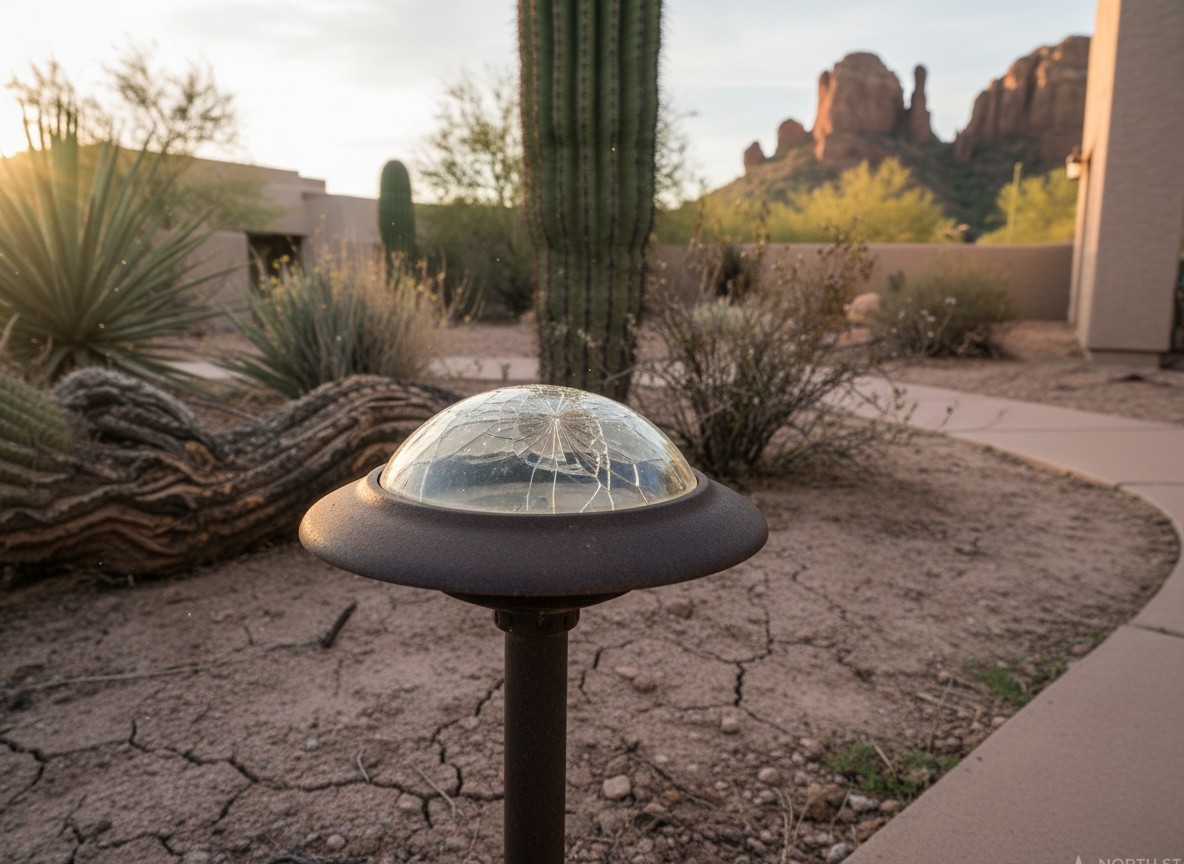
Heat is one of the main reasons outdoor lighting systems fail early in Arizona. Even when fixtures look fine, the constant high temperatures slowly damage materials and electronics.
Fixture Housing and Structural Integrity
Lower-grade metals can warp or weaken over time, which causes fixtures to shift, tilt, or lose alignment. Plastic and composite housings are even more vulnerable and can deform, become brittle, or crack in extreme heat. Heat also loosens mounting brackets and stakes, which is why pathway and uplights often end up crooked or unstable.
LED Performance and Lifespan
Heat is the biggest enemy of LED components. When fixtures run hot day after day, LEDs lose brightness faster and can shift in color over time. This is why fixture design matters in Arizona, especially heat sinks. Poor heat management leads to early failure of LEDs and drivers.
Wiring and Internal Connections
Prolonged heat can degrade wire insulation, making it brittle and increasing the risk of shorts and intermittent failures. Connection points are also common failure areas. Heat and expansion cycles loosen splices and connectors, leading to flickering lights and fixtures that stop working during peak summer.
How UV Exposure Damages Outdoor Lighting Components
UV exposure is one of the most overlooked causes of outdoor lighting failure in Arizona. While heat stresses internal components, constant sun exposure quietly breaks down the materials that protect the fixture from the elements.
Lens Degradation and Clouding
Prolonged UV exposure causes lenses to yellow and develop a hazy appearance over time. This reduces light output and creates uneven or distorted beam patterns, even if the LED itself is still functioning properly. Material choice matters here. Glass lenses hold up best in Arizona sun, while polycarbonate and acrylic lenses tend to degrade faster, especially in fixtures exposed to direct or reflected sunlight.
Finish Fading and Corrosion
UV rays also attack fixture finishes. Painted fixtures often fade, chalk, or peel within a few years, while lower-quality powder-coated finishes can discolor and break down. Once the finish fails, the underlying metal is exposed. Even in a dry climate, that exposure leads to oxidation and corrosion, especially during the monsoon season or in areas with irrigation overspray.
Seal and Gasket Failure
Rubber and silicone seals are highly vulnerable to UV damage. As they break down, they lose flexibility and crack, allowing moisture and dust inside the fixture. During monsoon season, failed seals often lead to internal condensation, corrosion, and electrical issues that shorten the life of the entire lighting system.
Common Outdoor Lighting Failures Caused by Arizona Heat and Sun
Arizona’s heat and sun cause predictable failure patterns in outdoor lighting systems. Many homeowners assume these issues are random or related to installation, when in reality they are direct results of prolonged exposure to extreme temperatures and UV radiation.
- Flickering or dimming lights during peak summer months
- Often caused by heat-stressed LED drivers and power regulation issues
- Loose internal connections expand and contract, creating intermittent contact
- The problem typically worsens in late afternoon and early evening when surfaces are hottest
- Fixtures that discolor or crack within one to two years
- Low-grade finishes fade, chalk, or peel under constant UV exposure
- Plastic and composite housings become brittle, warp, or split
- Lenses may yellow or cloud, reducing light output even if the LED still works
- Premature transformer failures
- Transformers run hotter in Arizona, especially when undersized or overloaded
- Poor ventilation and direct sun exposure accelerate internal component breakdown
- Failures often show up as lights cutting out, inconsistent brightness, or entire zones going dark
- Systems that work at night but fail during hot daytime temperatures
- Heat-sensitive components stop operating reliably once internal temperatures spike
- Common with lower-quality fixtures, drivers, and connection points
- A strong indicator that the system isn’t built for desert conditions
Why Cheap Outdoor Lighting Systems Fail Faster in Arizona
Cheap outdoor lighting systems might look fine at first, but Arizona’s climate quickly exposes their weaknesses. These systems are typically designed for milder environments and use materials and components that cannot withstand prolonged heat or intense sunlight.
Material Quality Issues
Low-cost fixtures often rely on thin metals, poor surface coatings, and low-grade plastics. In Arizona heat, thin metals warp and weaken, while inferior coatings fade, peel, or chalk within a short time. Plastics used in budget fixtures frequently become brittle, crack, or deform after repeated exposure to high temperatures. Many inexpensive systems also lack UV-resistant components, which accelerates lens yellowing, finish breakdown, and seal failure. Inferior wiring and connectors are another major issue. Low-grade insulation breaks down faster in heat, increasing the risk of shorts, flickering, and inconsistent performance.
Design Shortcomings
Beyond materials, cheap systems suffer from poor design. Many fixtures lack proper ventilation, trapping heat inside the housing and raising internal temperatures well beyond safe operating limits. Poorly designed or undersized heat sinks fail to pull heat away from LED chips and drivers, leading to reduced brightness and early component failure. These fixtures are rarely engineered for desert climates, so they cannot withstand Arizona’s surface temperatures, reflected heat, or daily thermal expansion cycles.
Solar Lighting Limitations in Extreme Heat
Solar lighting performs especially poorly in Arizona. High temperatures degrade batteries quickly, often within a single summer. Extreme heat also reduces solar panel efficiency, leading to reduced nighttime output. For many homeowners, solar lights fail completely after one season.
What to Look for in Outdoor Lighting Fixtures Built for Arizona
Choosing the right outdoor lighting in Arizona starts with materials and design that can handle constant heat and sun. Fixtures built for mild climates rarely last here, even if they look high-quality at first.
Heat-Resistant Materials
Material choice matters more in Arizona than almost anywhere else. Solid brass, copper, and high-quality aluminum hold up far better than thin or mixed metals. These materials resist warping, manage heat more effectively, and maintain their structural integrity over time. Fixtures should also use UV-stabilized lenses and protective coatings to prevent yellowing, fading, and surface breakdown. High-temperature-rated wiring is critical. Standard wiring insulation degrades quickly in extreme heat, while higher-rated wire maintains flexibility and performance year after year.
Proper Fixture and System Design
Well-designed fixtures allow heat to escape instead of trapping it. Open-air designs help regulate internal temperatures and protect LED components. Heat sinks should be properly sized and integrated into the fixture, not treated as an afterthought. The system itself matters just as much as the fixture. Professional-grade transformers rated for desert conditions are less likely to overheat or fail during peak summer. Smart placement also plays a role. Positioning fixtures to limit direct afternoon sun reduces stress on both fixtures and electronics.
Professional Installation Considerations
Proper spacing prevents heat buildup between fixtures. Mounting techniques that limit direct heat transfer from masonry or stone help extend fixture life. Correct wire burial depth and protection prevent heat damage, moisture intrusion, and long-term electrical issues.
Maintenance Tips to Extend Fixture Life in Arizona
Outdoor lighting in Arizona lasts longer when it’s maintained with the desert climate in mind. A small amount of seasonal upkeep can prevent many of the most common failures caused by heat, UV exposure, and dust buildup.
Start with seasonal inspections, especially before summer and after peak heat season. This is the best time to catch early signs of stress, including fading finishes, loose fixtures, and inconsistent performance. Cleaning lenses and housings is also important. Dust, hard water deposits, and dirt can accumulate quickly in Arizona, reducing light output. In some cases, buildup can also increase heat retention, causing fixtures to run hotter than they should.
At least once per year, check seals, wiring, and connections. Look for cracked gaskets, brittle wiring insulation, corrosion, and loose splices. These issues often lead to flickering and intermittent failures during the hottest months. Finally, adjust fixture angles as landscaping grows or shifts. Desert plants and trees can change lighting patterns over time, and fixture repositioning helps maintain the original design while preventing glare.
Outdoor Lighting in Arizona Requires a Desert-Ready Approach
Arizona’s heat and sun demand a different approach to outdoor lighting, as the climate can degrade both materials and electronics. High surface temperatures, constant UV exposure, and daily expansion and contraction cause cheap fixtures to fail early and even mid-grade systems to underperform. That’s why outdoor lighting in Arizona is less about picking a style and more about choosing fixtures and components engineered to survive desert conditions.
When homeowners invest in the right materials, heat-resistant wiring, and properly designed fixtures upfront, they avoid the cycle of replacing lights every year or two. A professionally designed system also performs better, looks more consistent at night, and stays reliable through the hottest months.
Schedule a professional outdoor lighting evaluation with North Star Outdoor Lighting AZ to identify what’s failing, what can be repaired, and what should be replaced with desert-ready fixtures.
FAQs
How long should outdoor lighting fixtures last in Arizona?
High-quality, professionally installed fixtures should last 10 to 15 years in Arizona. Cheaper fixtures often fail within one to three years due to heat and UV damage.
Are LED lights still a good option in extreme heat?
Yes, when they are designed for high-temperature environments. LEDs with proper heat sinks and high-quality drivers perform well in Arizona and last significantly longer than older lighting technologies.
Why do my outdoor lights fail every summer?
Most failures are caused by heat stress. High temperatures damage LED drivers, wiring, seals, and transformers, especially in systems not built for desert conditions.
Can existing systems be upgraded for better heat resistance?
In many cases, yes. Fixtures, wiring, connectors, and transformers can often be upgraded without replacing the entire system.
Is professional installation really necessary in Arizona?
Yes. Proper placement, spacing, wiring protection, and heat management are critical in Arizona. Professional installation prevents common failures caused by poor design and heat buildup.