
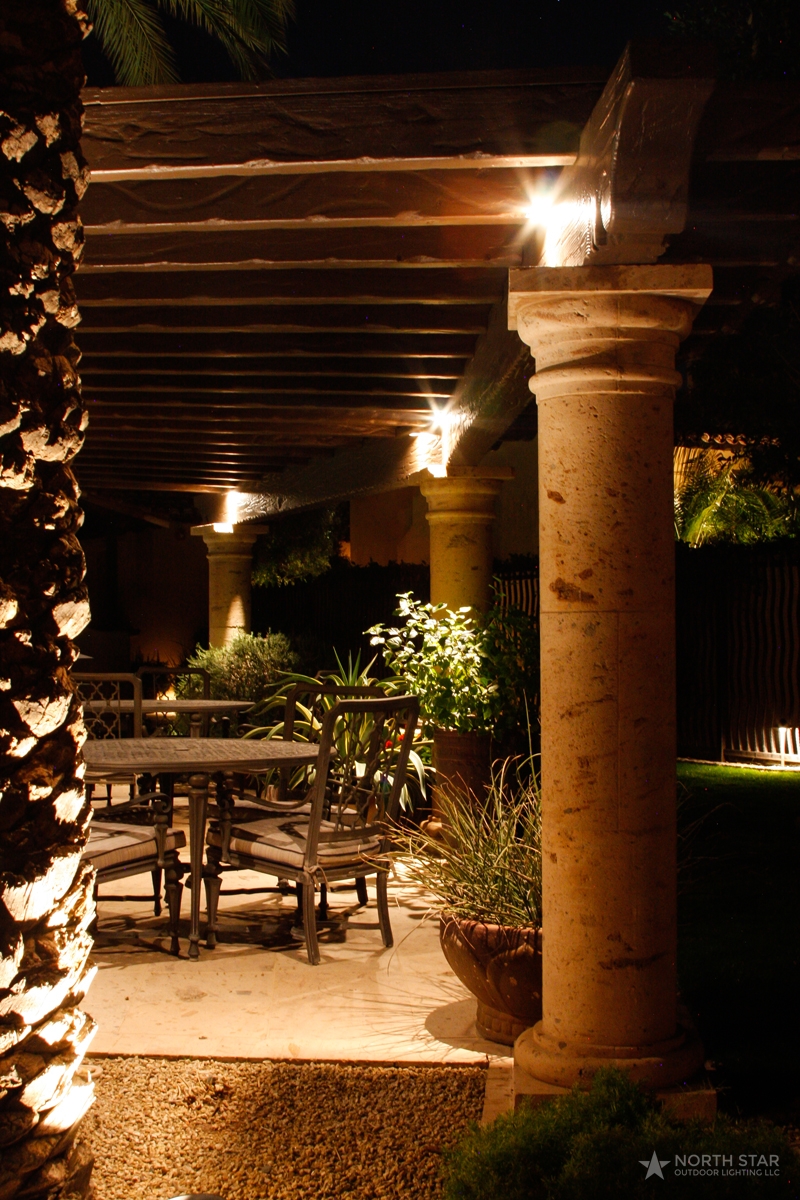
Outdoor security lighting can make it easier to see who is approaching your home, reduce dark areas, and help family members and guests move safely around the property after sunset.
The five most important areas to illuminate are:
- Front, side, and rear entrances
- Driveways and walkways
- Backyards and patios
- Garages and side gates
- Fences and property perimeters
An effective plan does not require flooding the entire property with bright light. Strategic placement creates better visibility while controlling glare, harsh shadows, light trespass, and unnecessary energy use.
A randomized study conducted at New York City public housing developments found that additional street lighting was associated with a substantial reduction in nighttime outdoor crime. That research examined community street lighting rather than residential landscape lighting, so homeowners should view lighting as one part of a broader home-security plan.
Professional outdoor lighting design helps homeowners place the right fixtures in the right locations. The goal is to create consistent coverage around vulnerable areas without making the home feel overlit or turning the property into a commercial parking lot.
1. Front Entrances and Doorways
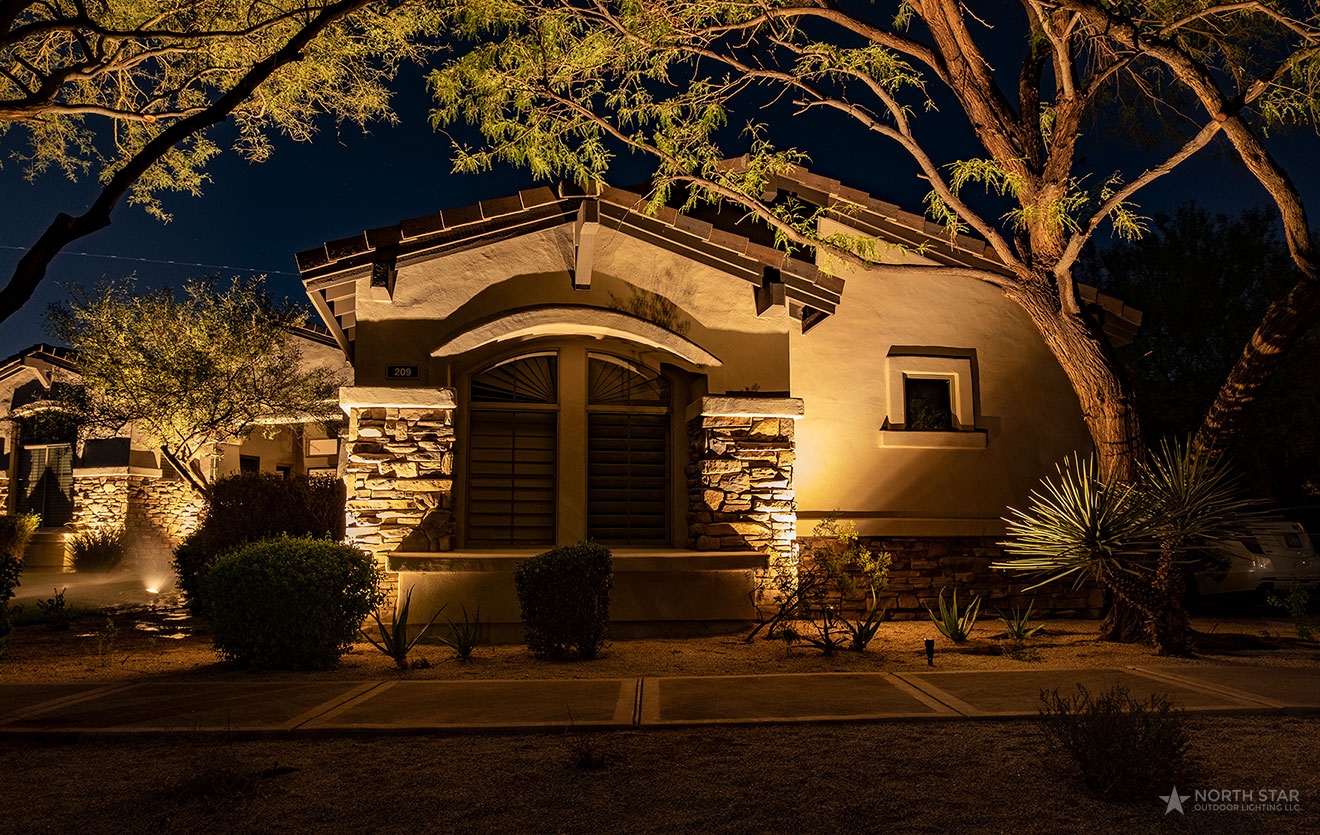
The front entrance is one of the most important areas to illuminate because it is the primary arrival point for homeowners, guests, delivery drivers, and service providers.
Lighting should make it easy to see the front door, porch, house number, steps, locks, and anyone standing near the entrance. It should also help a doorbell camera capture a clear image without glare washing out a visitor’s face.
Use Layered Lighting Around the Front Door
A well-designed entrance usually benefits from more than one source of light.
Common options include:
- Wall-mounted fixtures on one or both sides of the door
- A hanging or flush-mounted fixture beneath a covered entry
- Recessed lights installed in the porch ceiling
- Low-voltage path lights leading toward the entrance
- Accent lights that softly illuminate nearby columns or landscaping
Wall-mounted fixtures can provide balanced illumination at approximately eye level. Overhead and recessed lights help brighten the porch floor, steps, and area directly in front of the door.
Path lights create a visible route from the driveway or sidewalk to the entrance. They also reduce the sharp transition between a bright porch and a dark front yard.
Avoid Glare and Deep Shadows
More brightness does not automatically create better security.
A fixture pointed toward a person’s eyes can make it harder to see the surrounding area. Excessively bright lights can also create deep shadows beyond the illuminated zone.
For better visibility:
- Aim fixtures downward toward doors, steps, and walking surfaces
- Use shielded fixtures to control the direction of the light
- Choose frosted or diffused lenses when appropriate
- Keep lights out of the direct field of view of security cameras
- Use overlapping beams to soften transitions between bright and dark areas
- Select brightness levels based on the size and layout of the entrance
Responsible outdoor lighting focuses light where people need it while limiting glare, sky glow, and light that spills onto neighboring properties. DarkSky International’s outdoor-lighting guidance also emphasizes controlling light trespass and obtrusive illumination through fixture design and placement. Scottsdale homeowners can review the city’s exterior and site lighting design guidelines before finalizing a plan.
Illuminate Side and Rear Doors
Side and rear doors often receive less attention because they are less visible from the street. That lower visibility can make them attractive access points.
Inspect every exterior door, including:
- Patio doors
- Side garage doors
- Pool-area entrances
- Utility-room doors
- Doors near trash or storage areas
- Gates that lead to rear entrances
Motion-activated fixtures can work well in less frequently used locations. Small floodlights or directional downlights can cover narrow side yards without shining into adjacent homes.
The lighting should provide enough visibility to identify a person near the door while maintaining an even appearance across the property.
2. Driveways and Walkways
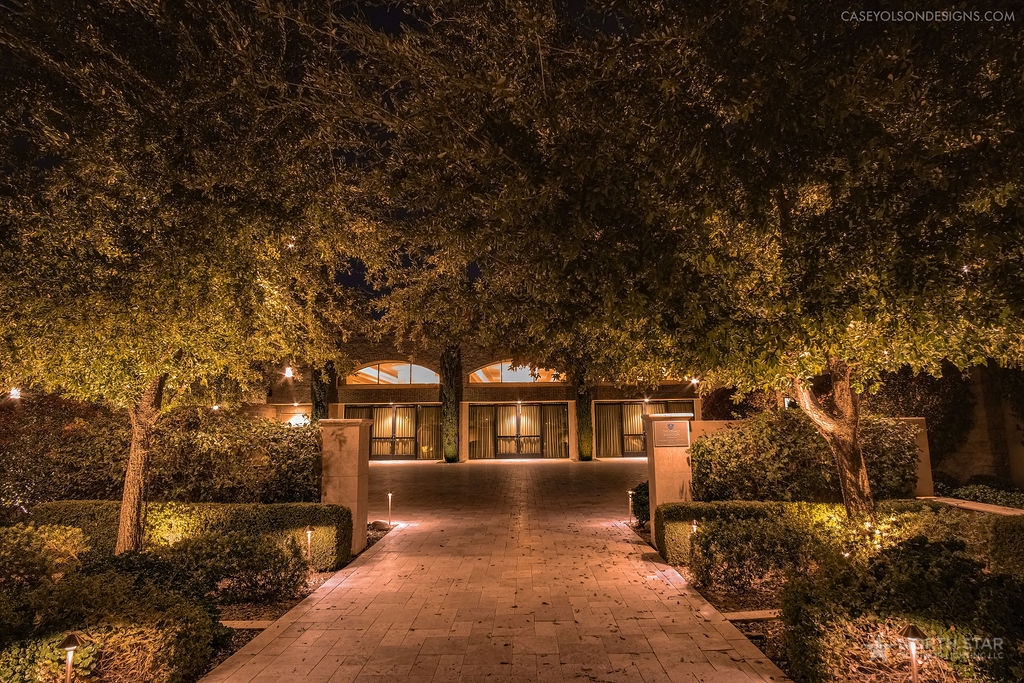
Driveway and walkway lighting helps homeowners see vehicles, visitors, obstacles, changes in elevation, and activity near the home.
A dark driveway can leave large portions of the front property difficult to monitor. It can also make it harder for visitors to find the entrance or safely navigate from their vehicle to the front door.
Create a Clearly Defined Route to the Home
Lighting should visually connect the street, driveway, parking area, walkway, and entrance.
Depending on the property, a driveway lighting plan may include:
- Low-voltage path lights
- Bollard lights
- Downlights mounted in trees or architectural structures
- Recessed fixtures installed along driveway edges
- Directional lights aimed across parking areas
- Wall-mounted fixtures near the garage
Fixture spacing should follow the driveway layout. Long, curved driveways may need multiple light sources to reveal turns and landscape boundaries. Short urban driveways may require a few carefully placed fixtures near the garage and walkway.
The objective is continuous visual guidance without creating a runway effect from rows of identical fixtures. Our guide to pathway lighting for safe, inviting walkways covers spacing and fixture selection in more detail.
Position Motion Sensors Strategically
Motion-activated lights can provide immediate illumination when a vehicle or person enters the driveway.
Useful locations include:
- Near driveway gates
- Above or beside the garage door
- At the transition between the driveway and side yard
- Near detached garages
- Around guest parking areas
Motion sensors should be adjusted to cover the intended area. Poorly positioned sensors may activate repeatedly because of passing traffic, moving vegetation, pets, or activity on a neighboring property.
Sensor duration and sensitivity should match how the area is used. A driveway fixture may need to remain on long enough for someone to park, exit the vehicle, and reach the entrance.
Support Security-Camera Visibility
Outdoor lighting can improve the usefulness of security-camera footage when the fixtures and cameras are coordinated.
Lights placed directly beside or behind a camera can create glare, reflections, and washed-out images. A better approach places illumination within the camera’s field of view without pointing a high-intensity beam into the lens.
When planning driveway lighting:
- Review each camera’s viewing angle
- Illuminate approach routes and vehicle stopping points
- Reduce intense backlighting behind visitors
- Keep foliage from blocking fixtures or cameras
- Test the system after dark
- Check whether license plates and facial features remain visible
Camera performance varies by model and installation. Test the completed lighting plan using the property’s actual security equipment rather than assuming a bright fixture will produce a better recording.
Choose Durable Fixtures for Arizona Conditions
Outdoor fixtures in the Phoenix and Scottsdale area must perform through intense sun, high summer temperatures, dust, irrigation exposure, and seasonal storms.
Fixture selection should account for:
- UV exposure
- Water resistance
- Heat tolerance
- Corrosion-resistant materials
- Secure mounting
- Sealed electrical connections
- Ease of cleaning and adjustment
Low-quality fixtures may fade, crack, shift out of position, or allow moisture into electrical components. Durable professional-grade fixtures offer better long-term performance and make future maintenance easier — a point covered in more depth in our look at how Arizona heat and sun impact outdoor lighting fixtures.
North Star Outdoor Lighting provides custom outdoor lighting design, installation, LED upgrades, repairs, and maintenance for residential properties in Scottsdale and surrounding Arizona communities.
3. Backyards and Patio Areas
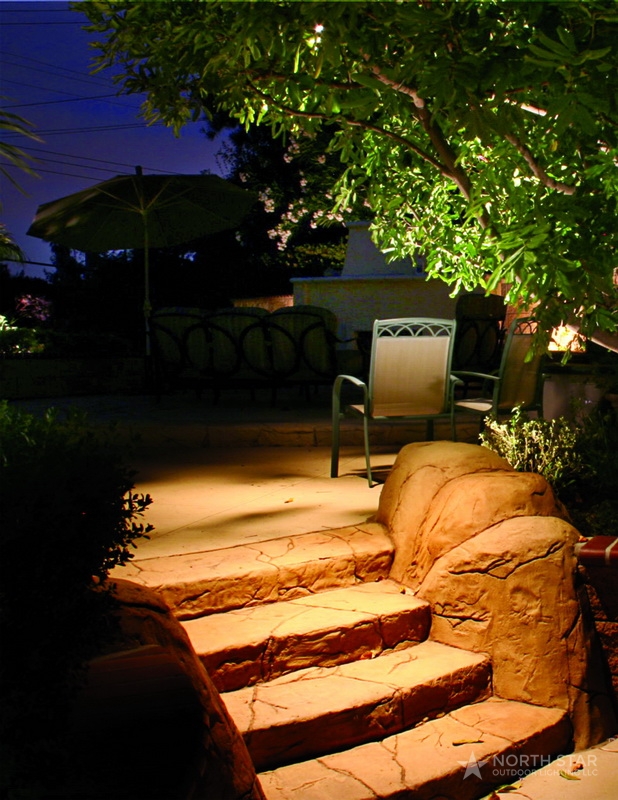
Backyards often contain several lighting challenges within one space.
A typical yard may include a patio, lawn, pool, outdoor kitchen, garden, steps, trees, storage areas, and multiple entrances. Lighting only the patio can leave the surrounding yard difficult to see.
A layered plan allows homeowners to use the outdoor space while maintaining visibility around the edges of the property.
Illuminate Doors, Windows, and Access Routes
Start with the areas that connect the backyard to the home.
These may include:
- Sliding glass doors
- French doors
- Pool-access doors
- Windows near ground level
- Walkways leading toward side gates
- Steps between the patio and yard
- Paths leading to detached structures
Lights should reveal movement near these areas without shining directly into the home.
Downlighting can be effective for patios and walkways because it resembles natural illumination from above. Recessed step lights can make elevation changes easier to identify. Directional fixtures can cover doors and paths while remaining visually discreet. Properties with a pool have additional considerations, which we cover in our guide to outdoor lighting around your pool.
Use Floodlights Selectively
Floodlights can cover a large area, but they require careful placement.
An overly bright floodlight may produce glare, disturb neighbors, or make the rest of the yard appear darker by comparison. It can also reduce the comfortable atmosphere homeowners want in an outdoor living area.
Floodlights work best when they are:
- Shielded from direct view
- Aimed toward specific activity zones
- Mounted high enough to distribute light evenly
- Positioned away from neighboring windows
- Paired with lower-level landscape lighting
- Controlled by motion sensors, timers, or smart systems
Spotlights provide a narrower beam and can target a rear gate, storage shed, door, or dense landscape area. Adjustable fixtures allow the beam direction to be refined after installation.
Combine Security With Outdoor Living
Patio lighting should support both visibility and comfort.
Useful fixture types include:
- Recessed ceiling lights
- Downlights
- Step lights
- Deck and railing lights
- Wall-mounted sconces
- Under-counter lighting
- Path lights
- Accent lighting around landscape features
The design should provide enough light for cooking, dining, walking, and entertaining while preserving a relaxed nighttime environment. See our guide to optimizing outdoor living spaces with the right lighting for more on balancing the two.
String lights can contribute decorative ambient light, but they rarely provide enough focused coverage for steps, gates, doors, or security-camera zones. Treat them as a decorative layer rather than the primary security solution.
Use Lighting Layers to Reduce Blind Spots
A balanced backyard commonly includes several lighting layers.
Ambient lighting provides general visibility across patios and larger gathering areas. Task lighting supports activities around grills, counters, stairs, and doors. Directional lighting helps define property edges, paths, and selected landscape features.
These layers should work together. Large differences in brightness can make it harder for a person’s eyes to adjust between areas.
Professional outdoor lighting design considers beam spread, fixture height, mounting position, glare control, landscape growth, and the way each space will be used. Our comprehensive guide to landscape lighting placement walks through those decisions, and North Star creates customized residential lighting plans designed to improve safety while complementing the home and landscape.
4. Garages and Side Gates
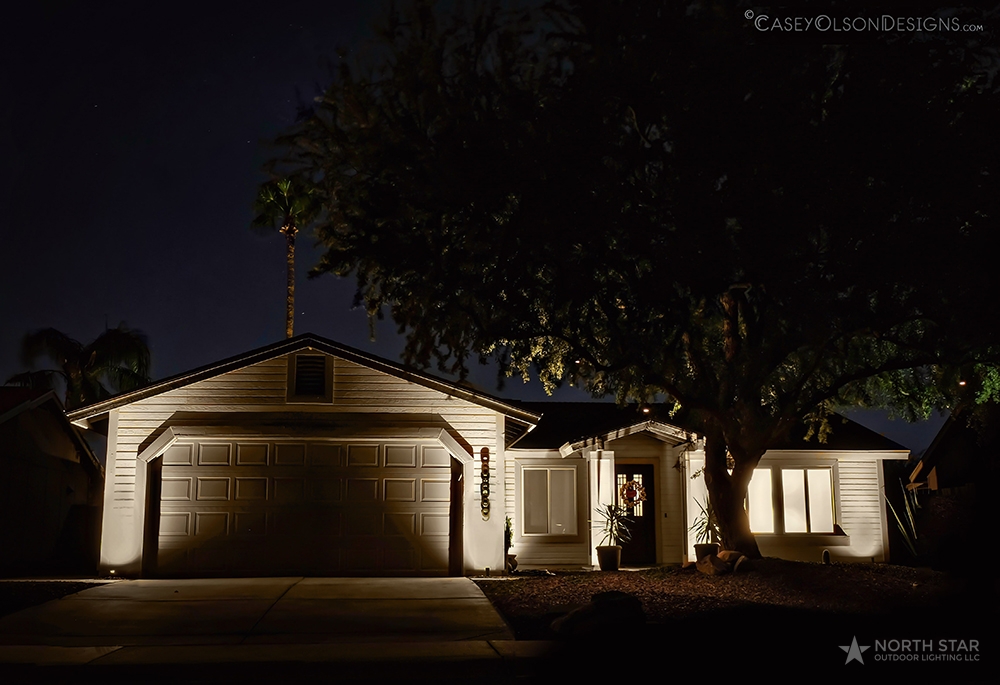
Garages and side gates can become major blind spots when lighting plans focus primarily on the front porch and backyard.
Garages may contain vehicles, tools, recreational equipment, and household storage. Many also provide direct access to the interior of the home.
Side gates lead to areas that are often hidden from street view. A person may be able to approach a gate or move through a side yard without entering the coverage of a front-porch light.
Light the Full Garage Area
A single fixture above the garage door may leave the sides of the building and nearby walkway dark.
A more complete plan may use:
- Wall-mounted fixtures beside garage doors
- Downlights mounted beneath eaves
- Motion-activated fixtures near side access doors
- Low-voltage lights along the adjacent walkway
- Directional lights covering detached garages
- Separate fixtures for parking and pedestrian areas
Aim fixtures so they cover the driveway surface, garage entrance, side door, and nearby corners.
For multi-car garages, evenly distributed fixtures can create better visibility than one powerful light mounted in the center.
Cover Both Sides of the Gate
Lighting only the street-facing side of a gate may leave the interior side yard dark.
Evaluate the complete route, including:
- The approach to the gate
- The latch and lock area
- The space immediately behind the gate
- The path leading toward the backyard
- Nearby windows and doors
- Trash, pool-equipment, and utility areas
A low-level path light can reveal the walking surface, while a shielded downlight or motion fixture can provide broader visibility.
Fixtures should avoid interfering with gate operation. Wiring should also be protected from landscaping equipment, irrigation work, pets, and repeated foot traffic.
Control False Motion Activations
Side-yard motion sensors can be triggered by branches, animals, air-conditioning equipment, or activity beyond the property line.
Position the sensor so its detection zone matches the path or gate area. Trim plants that move directly in front of the sensor, and adjust sensitivity after observing the system for several nights.
Smart controls may allow homeowners to review activation patterns, create schedules, or integrate lighting with cameras and other home systems.
5. Fences and Property Perimeters
Perimeter lighting helps homeowners see activity near gates, fence corners, landscape boundaries, and less visible areas of the property.
The goal is to identify important access points and eliminate major blind spots. It is rarely necessary to place bright fixtures across every foot of fencing.
Prioritize Vulnerable Perimeter Areas
Start by identifying locations where someone could approach or enter the property with limited visibility.
Common priorities include:
- Pedestrian and vehicle gates
- Fence corners
- Areas near alleys
- Open desert boundaries
- Dense trees or shrubs near the fence
- Utility access points
- Detached buildings
- Changes in elevation
- Paths leading toward the home
Direct lighting toward these areas while keeping the source shielded from neighboring properties.
Use Overlapping Beams
Large gaps between fixtures can create alternating bright and dark zones.
Overlapping beams provide more consistent visibility and make transitions between areas easier on the eyes. This can be achieved through a combination of downlights, directional spotlights, low-level path fixtures, and lights mounted near gates.
The correct spacing depends on fixture output, beam angle, mounting height, terrain, and nearby landscaping.
A lighting designer should evaluate the property after dark. Daytime planning alone may miss shadows created by walls, trees, rooflines, and changes in grade.
Avoid Light Trespass
Perimeter lighting requires particular attention to neighboring properties.
Fixtures should remain directed within the property whenever possible. Shielding, careful aiming, appropriate brightness, and smart controls can help reduce light crossing a fence or shining into nearby windows.
DarkSky guidance recommends using outdoor light only where it is useful and controlling its direction, intensity, duration, and color. These principles can improve visibility while reducing glare and unnecessary light pollution.
How Bright Should Outdoor Security Lighting Be?
There is no single brightness level that works for every home.
The appropriate output depends on:
- Fixture type
- Mounting height
- Beam angle
- Distance from the target area
- Existing ambient light
- Surface colors and reflectivity
- Camera placement
- Neighboring properties
A small side entrance may need a lower-output shielded fixture. A large driveway or detached garage may need broader coverage from multiple fixtures.
Homeowners should evaluate the complete scene rather than comparing fixture brightness alone. Several moderate fixtures often produce better visibility than one extremely bright fixture.
What Color Temperature Works Best?
Warm white LEDs are commonly used in residential outdoor lighting because they provide useful visibility while creating a comfortable appearance.
A warmer color temperature can complement stucco, stone, desert landscaping, wood, and other materials commonly found in Arizona homes. It can also reduce the harsh blue-white appearance associated with some high-output security lights.
Color temperature should remain consistent throughout connected areas. Mixing several noticeably different light colors can make the design feel unplanned and affect how surfaces appear on camera. Our overview of how to use color in outdoor LED lighting explains where color belongs and where it does not.
Motion-Activated or Dusk-to-Dawn Lighting?
Both options can support a security-lighting plan.
Dusk-to-dawn lighting works well for areas that benefit from consistent nighttime visibility, such as entrances, paths, and selected landscape zones.
Motion-activated lighting is useful for locations that need additional brightness when activity occurs, such as side gates, garages, and rear property lines.
Many properties benefit from a combination:
- Low-level lighting remains on during the evening
- Motion sensors activate brighter task or security lighting
- Timers reduce unnecessary illumination later at night
- Smart controls allow schedules to change throughout the year
The controls should match the way the homeowner uses the property.
Arizona Outdoor Security Lighting Considerations
Arizona properties require lighting systems designed for the local environment.
Heat and Sun Exposure
Direct sun and extreme heat can affect fixture finishes, seals, lenses, wiring, and plastic components. Use outdoor-rated fixtures made from durable materials and inspect exposed equipment regularly.
Dust and Landscape Debris
Dust can accumulate on lenses and reduce light output. Leaves, branches, and fast-growing plants can also block beams or trigger motion sensors.
Clean fixtures periodically and adjust them as landscaping changes.
Irrigation and Drainage
Low-voltage wiring and ground-mounted fixtures should be placed with irrigation patterns in mind. Repeated sprinkler exposure, pooling water, and landscape maintenance can affect system performance.
Monsoon Conditions
Secure mounting and weather-resistant connections become especially important during seasonal wind and rain. Fixtures that shift during storms may create glare or point light away from the intended area. When damage does occur, our guide on when to repair versus replace an outdoor lighting system can help you decide on the next step.
Neighboring Homes and Dark-Sky Concerns
Many Scottsdale-area properties are close enough for poorly aimed fixtures to affect neighboring yards and windows. Larger desert-edge properties may also need careful lighting to preserve views of the night sky.
Shielded fixtures and precise aiming allow homeowners to improve visibility without overlighting the entire area.
Improve Your Home Security With Professional Outdoor Lighting
A strong outdoor security lighting plan focuses on the areas where people enter, walk, park, gather, and approach the property.
Entrances should reveal visitors clearly. Driveways and walkways need continuous visual guidance. Backyards require balanced coverage around doors and activity areas. Garages, gates, and property lines need targeted lighting that reduces blind spots.
Fixture selection matters, but placement determines how well the system performs. There are also several benefits to professional outdoor lighting installation beyond security alone.
North Star Outdoor Lighting is locally owned and operated in Scottsdale, Arizona. Todd Meyer and his team provide professional outdoor lighting design, installation, LED upgrades, repairs, and maintenance for residential properties.
Request a free estimate to discuss a customized outdoor lighting plan for your home, or call North Star Outdoor Lighting at (480) 248-0194.
Frequently Asked Questions About Outdoor Security Lighting
Where should outdoor security lights be placed?
Prioritize exterior doors, driveways, walkways, patios, garages, side gates, fence corners, and other locations where someone could approach the home without being easily seen.
Do outdoor lights deter intruders?
Outdoor lighting can reduce hiding places, reveal movement, and increase the visibility of people approaching a property. It should support locks, cameras, alarms, gates, and other security measures rather than serve as the only form of protection.
Should security lights stay on all night?
Some low-level entrance and pathway lights can remain on from dusk until dawn. Brighter security fixtures may work better with motion sensors, timers, or smart controls to limit glare and unnecessary energy use.
Are motion-activated lights better than dusk-to-dawn lights?
Each serves a different purpose. Motion lights provide additional illumination when activity occurs. Dusk-to-dawn lights maintain consistent visibility. A combination often provides the best coverage.
Can outdoor lighting improve security-camera footage?
Properly positioned lighting can help cameras capture clearer nighttime footage. Fixtures should illuminate the viewing area without shining directly into the camera lens.
How bright should outdoor security lights be?
Brightness should match the size of the area, mounting height, beam spread, and surrounding light levels. The system should create even coverage without intense glare or deep shadows.
What color temperature is best for outdoor security lighting?
Warm white LED lighting is a strong choice for many residential properties. It provides useful visibility while maintaining a comfortable appearance that complements most homes and landscapes.
How can I keep outdoor lights from bothering my neighbors?
Use shielded fixtures, aim beams downward, limit brightness, install timers or motion controls, and keep light within the property boundary.
Are solar lights effective for home security?
Solar lights can provide low-level pathway guidance, but their performance depends on sun exposure, battery capacity, fixture quality, and weather conditions. Hardwired low-voltage lighting generally provides more consistent output for critical security zones.
How often should outdoor lighting be inspected?
Inspect the system several times each year and after major storms or landscape work. Clean lenses, trim blocked fixtures, test controls, and correct fixtures that have shifted out of position.